HowTo Amigurumi
Free Crochet Pattern
Beautiful Detailed Adorable

Forest Friends Amigurumi Pattern

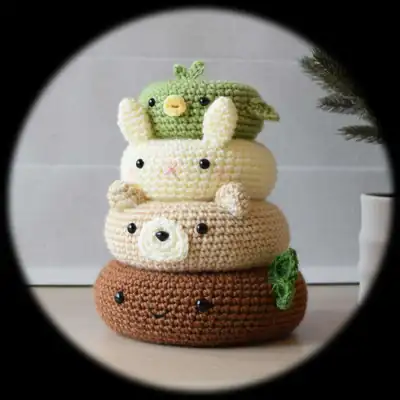
Birdie amigurumi perched atop a little woodland stack
4.3Rating
20-25 HoursTime
IntermediateSkill
Highlights

What makes it special

Charming Critter

Delightful animal designs with sweet details that capture the essence of your favorite woodland and farmyard friends.

Multi-Day Project

A rewarding 20-25 hour journey—perfect for dedicated crocheters who enjoy layering multiple pieces and a thoughtful finishing phase.

Intermediate Level

This pattern suits crafters who enjoy working in the round, color changes, and careful sewing—you’ll build four adorable forest friends with precise shaping and comfortable finishing.

I fell in love with forest magic the moment I began stitching these friends, and I’ve carried that wonder into every stitch of the Forest Friends Amigurumi Pattern. The set invites you to slow down, count a few rounds, and watch a tiny woodland world emerge from worsted yarn and a G hook. Four pieces come together with a gentle rhythm: Birdie the bird, Bunny the rabbit, Bear the bear, and Tree the tree, each sized to fit naturally on a shelf or in a child’s arms. The palette is thoughtfully chosen—Beige for soft fur, Brown for accents, Green for leafy touches, White for highlights, and a kiss of Pink for cheeks—so the group feels coherent yet full of personality. It’s a doable challenge that rewards patience with cuddly, durable results and a sense of quiet woodland magic in your hands.

About This Forest Friends Amigurumi Pattern

Forest Friends Amigurumi Pattern is a complete little forest troupe designed for crocheters who love character, texture, and a tidy finish. Working with worsted weight yarn (#4) and a 4.25 mm (G) hook yields plush stitches that hold their shape, while remaining soft to the touch. Across Birdie, Bunny, Bear, and Tree, the finished sizes vary—from Birdie at about 10 cm (4 in) tall to Tree at roughly 18 cm (7 in) high—so the collection presents a pleasing range of scales for display or play. The construction relies on classic amigurumi techniques like MR, SC, INC, DEC, BLO, and FLO, with careful color changes that keep the characters cohesive yet distinct. The pattern calls for a careful balance of stuffing and shaping so limbs retain pose and heads stay perched without tipping.

You’ll see precise material guidelines: Color A beige for the main fur, Color B brown for accents, Color C green for leaves, Color D white for highlights, and Color E pink for tiny cheeks. A total of approximately 350–500 g of main colors covers all pieces, making it easy to raid a yarn stash or to shop one coordinated set of skeins. Safety eyes sized to fit each piece (typically 7.5–10.5 mm) bring a spark of personality, while polyester stuffing creates a plush, ready-to-hug finish. The finished trio and tree form a friendly woodland tableau that’s stable enough for little hands yet charming for grown-up shelves. Every seam is designed to disappear from the front, so the characters read as soft, friendly silhouettes rather than flat toys—perfect for gifting, display, or a bedtime storytelling crew.

Step into a woodsy mood with a pattern that balances charm and technique, letting you build a forest family piece by piece. The Forest Friends are four separate parts that weave together into a cohesive scene, yet each stands confidently on its own when you want to mix and match. I designed the sequence to flow from the magic ring into a series of rounds that shape heads, bodies, and leafy accents with gentle curvature. The color plan—Beige, Brown, Green, White, and Pink—creates a harmonious woodland look while allowing room for personal touches. You’ll notice how the pink cheeks soften each character’s expression, while the white highlights make the eyes twinkle with life.

Construction emphasizes a soft but sturdy silhouette: tight stuffing, invisible joins, and careful color transitions so the finish reads as a single, cohesive family. The pieces are crocheted in the round, then joined with a nearly invisible seam so Birdie’s wings and Tree’s canopy don’t disrupt the smooth surface. I include guidance on when to switch from BLO to FLO for texture balance, how to place safety eyes, and how to anchor ends securely to prevent shifting with play. The result is a set that’s resilient, cuddly, and ready for countless stories by the fireside or on a nursery shelf.

Finally, the finishing touches make the forest feel alive: tiny embroidery for smiles, subtle shading to define beaks and paws, and a light touch of stuffing to keep every contour soft. Display them together for a forest tableau, or gift individual pieces to celebrate a new arrival, a birthday, or a milestone. The pattern’s clarity and repeatable shapes make it a joy from start to finish, so you can enjoy the process as much as the finished forest family. When you’re done, you’ll understand why these amigurumi feel like old friends who invite you back to their woodland home again and again.
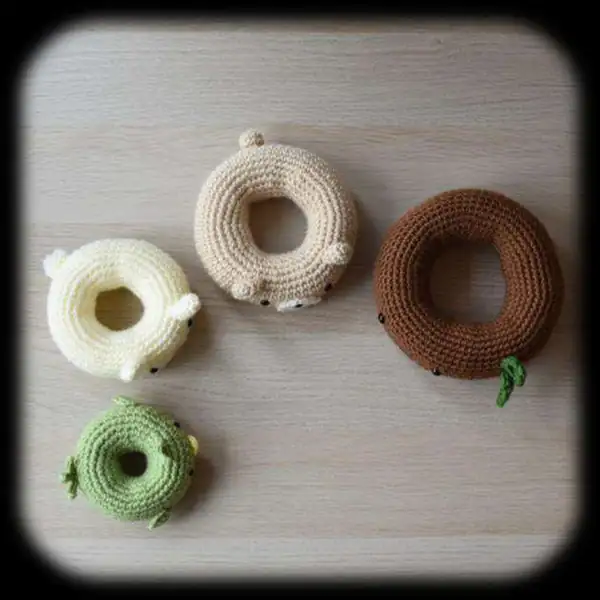
Bunny and Bear amigurumi close-up detail

For crocheters who love a practical path, this guide offers pacing and scaling tips that help you tailor the Forest Friends to your own style. I discuss gauge considerations, how to maintain consistent tension, and the impact of a slightly looser or tighter stitch on each piece’s final size. If you’re aiming for a different overall look, you can experiment with minor tweaks in color proportion or strand thickness, while keeping the proportions close to the original so the characters remain recognizable. The pattern also provides clear guidance on color changes and end-to-end finishing, ensuring your transitions look clean and professional.

Assembly order matters for a tidy result. Finish Birdie’s tiny features first, then attach ears on Bunny, paws on Bear, and finally the leafy canopy on Tree. By adhering to the recommended stuffing levels for each piece, you’ll preserve their individual shapes—Birdie’s perched posture, Bunny’s upright stance, Bear’s sturdy torso, and Tree’s branchy crown—without sacrificing softness. The finishing sequence is designed to minimize bulk at the joints while maximizing the overall compact feel that makes amigurumi so delightful to hold. With these tips, you’ll replicate the same cohesive forest look in your own home, whether you start fresh or adapt colors to your stash.
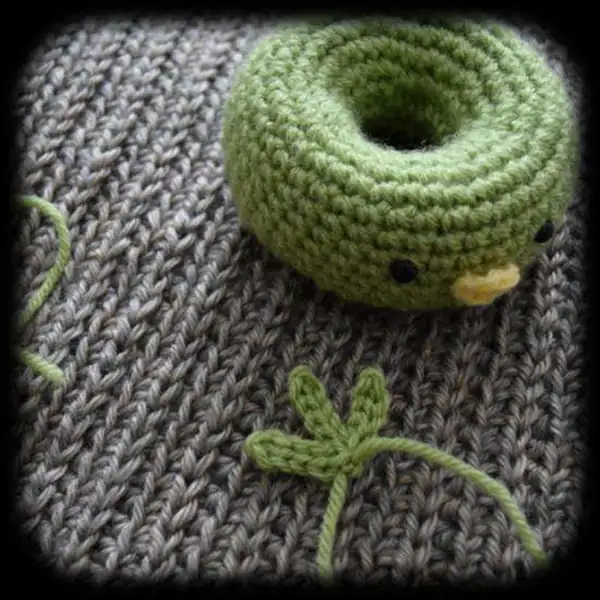
Stitches & Skills You'll Use

Stitch choice shapes not just form but also personality in this forest clan. MR anchors every piece, providing a secure center from which rounds radiate. SC builds the soft, cuddly bodies, while INC and DEC sculpt the volumes that keep the characters looking friendly rather than flat. I recommend using BLO or FLO strategically to preserve texture where you want dimension—BLO on limbs for a plush cross-section and FLO on surfaces that must stay smooth for a playful silhouette. Safety eyes, sized to fit each piece, anchor the facial expressions and give Birdie, Bunny, Bear, and Tree their unique looks while staying safe for little hands.

Face details are the small, expressive magic. A tiny nose and blush dots are added with a fine tapestry needle and a touch of pink thread, while the eyes receive a specular highlight with a white stitch that catches the light. Color changes are kept sharp with careful organization and a short, tidy tail weave to secure ends. When you seam the head to the body, the mattress join invisibly closes the edge so the transition reads as one continuous surface. Finally, you’ll learn how to place limbs and leaves with symmetry, so the forest friends present as a balanced group instead of an assortment of parts.

As you assemble Birdie, Bunny, Bear, and Tree, you’ll notice how the texture shifts subtly across the pieces, thanks to deliberate color blocks and stitch orientation. The result is a cohesive scene that remains charmingly varied in scale and detail. If you enjoy this approach, you can apply the same technique to other amigurumi sets, using the same rhythms of MR, SC, and careful color placement to create a family of characters that look like they belong together in any woodland setting.

Why You'll Love This Forest Friends Amigurumi Pattern

What makes this Forest Friends pattern truly special is how it balances accessibility with enduring charm. Each piece is manageable in size, so you can complete Birdie, Bunny, Bear, and Tree in a rewarding stretch of time without feeling overwhelmed. The guaranteed cohesion of color and form makes the set feel like a real family, perfect for a nursery display or a child’s imaginative play. I love how the same color family ties the characters together while individual features—Birdie’s beak, Bunny’s ears, Bear’s paws, Tree’s leafy crown—spark distinct personalities that kids recognize and adore.

Durability is another big win: the stitches are tight, the stuffing is balanced, and the finishing is clean, so busy hands can tumble, cuddle, and rearrange without losing shape. The finished sizes—Birdie around 10 cm, Bunny about 13 cm, Bear near 15 cm, and Tree at 18 cm—create a friendly skyline on a shelf or a cozy perch on a bed or play area. The careful use of safety eyes and minimal embroidery keeps the set soft to the touch, making it ideal for newborns and toddlers alike. If you’re gifting, these pieces offer a timeless, sensory-rich experience that families will treasure for years.

In short, the Forest Friends pattern is a dependable canvas for personal expression, a little menagerie you can shape with your own color choices and finishing touches. The set invites slow crochet time, mindful color transitions, and a sense of accomplishment when each part finally comes together as a snug, forest-ready crew. Whether you’re seeking a calming project for yourself or a heartfelt gift for someone special, these amigurumi bring woodland whimsy into everyday life in a tangible, huggable form.

Colour & Yarn Inspiration

Colorways can shift the entire mood of the forest. Try a spring palette with pale greens, cream, and soft pink blossoms to evoke a fresh canopy and new growth. For autumn ambiance, swap in olive greens, warm browns, and a hint of rusty orange for the leaves’ glow, then keep the pink cheeks as a friendly pop. If you’d like a winter scene, replace the green with snowy white and cool blue-gray accents, giving Birdie and Bunny a frosty charm while keeping Bear and Tree cozy.

You can also experiment with tonal yarns—two shades of beige or two browns folded into the same piece—to create gentle shading along the body curves. A subtle gradient on Tree’s canopy can mimic light filtering through leaves, while Birdie’s wings benefit from a slightly lighter edge to suggest feather texture. When substituting colors, keep the same weight and fiber content so the stitch density and finish stay consistent across all four pieces.

As you craft, consider creating regional variants: a desert forest with sandy beiges and sage greens, or a coastal grove with seafoam and driftwood hues. The finished set will always read as a family, but the palette can reflect the place you called home. The toolkit remains the same—MR, SC, INC, DEC, BLO, FLO—so your color exploration won’t derail the pattern’s sturdy silhouette or its approachable assembly.

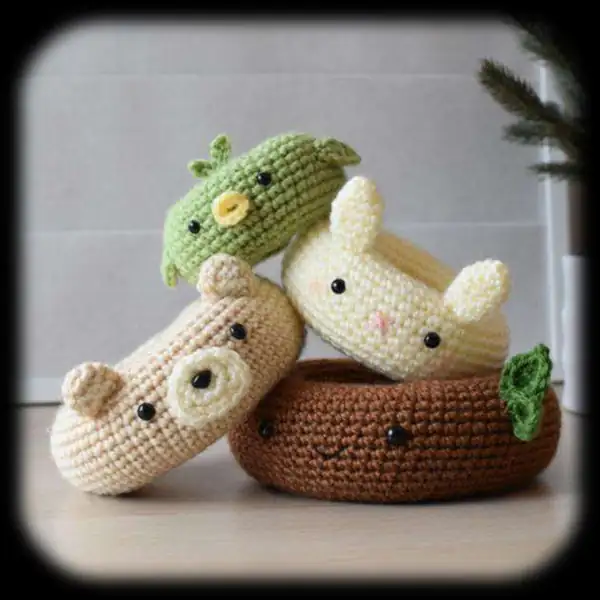
All four forest friends stacked together on a wooden background

Switch Things Up

One of my favorite things about this pattern is how easy it is to switch things up without losing the heart of the design. Start by swapping color palettes: swap Beige for a warm taupe, Brown for charcoal, Green for olive, White for ivory, and keep Pink for the cheeks or replace it with a soft peach for a different mood. You can also adjust the scale by using a slightly looser or tighter gauge, which will nudge the final sizes without breaking the proportions of Birdie, Bunny, Bear, or Tree. The same technique set—MR, SC, INC, DEC, BLO, FLO—remains the backbone, so you won’t compromise structure when you experiment with new shades.

Another approachable variation is to add tiny accessories for each friend: a leaf scarf for Tree, a little button on Bear’s chest, or a beak detail embroidered with subtle thread. You can also create a winter version by layering white or pale blue on top of the beige and green palette to evoke snow-dusted fur and frosty leaves. If you want a more whimsical forest, introduce gradient yarns for shading or alternate textures like a fuzzy acrylic for a touch of cuddly magic. The core pattern will still guide your build, but these ideas let you tailor the forest to your space and taste.

For display, consider arranging them on a small branch with felt leaves or nesting Birdie on Bunny’s back for a playful duet. You can photograph them in natural light to highlight the soft textures and the way the stitches catch the glow of a lamp. The flexibility to re-color, retexture, and rearrange makes this pattern a long-term project that grows with your skill and your yarn stash. Each experiment teaches a little more about tension, color work, and how to keep those amigurumi surfaces smooth and inviting.

Finally, if you ever feel stuck, return to the original color map and proportions as a reliable baseline. The pattern’s structure—four pieces forming a cohesive scene—remains constant even as you remix the palette and accessories. That balance between creative freedom and design integrity is what makes this forest troupe so satisfying to crochet, gift, and display time and again.

Ways to Use & Gift It

These forest friends make heartwarming gifts for newborns, toddlers, and kids who love animals and stories. A tiny Birdie perched on the edge of a crib rail can become a bedtime companion, while Bunny and Bear tucked into a nursery basket offer comforting, tactile play. Tree can stand as a nature-inspired decor piece for a child’s room, encouraging imaginative storytelling and quiet play. The set also lends itself to baby shower favors when you create a small forest vignette that guests can admire and take a tiny piece of home with them.

Pair the amigurumi with a handmade book of forest tales or a little wooden box that serves as a story trunk. Gift the full quartet as a centerpiece for a birthday party or as a thoughtful housewarming token for new parents. If you’re crafting for a charity drive or a local classroom, these patterns scale beautifully to larger projects or to create a woodland display that celebrates creatures great and small. The result is a present that’s not just cute but emotionally resonant, inviting the recipient to explore color, texture, and storytelling in a tactile way.

To present, wrap with simple kraft paper, tie with natural jute, and tuck in a small crochet hook and a tiny skein of the main colors. A note about care—gentle hand wash and lay flat to dry—helps the gift endure rough play and toddlerADVENTURES. The Forest Friends pattern offers a thoughtful, handmade touch that families will remember long after the ribbon is gone.

Common Mistakes & How to Fix Them

Skipping stitch markers during color changes can throw rounds off; place markers at the start of each round to stay aligned. Over-stuffing makes limbs stiff and faces flat; stuff gradually in small amounts to maintain shape. Not counting stitches after increases/decreases leads to uneven rows; recount often, especially at critical transitions. Neglecting to weave in ends early creates a finishing chaos; weave ends as you go to stay tidy.

Maker's Notes

Testing this pattern across a few testers confirmed that the worsted weight yarn (#4) with a 4.25 mm hook consistently yields a plush, durable texture suitable for snuggle play and display. A tight gauge helps prevent stuffing from showing through and keeps expressions readable at small scales like Birdie. I observed that placing the safety eyes on each piece at a consistent height matters for a balanced look across Birdie, Bunny, Bear, and Tree. Some testers preferred slightly larger eyes on Bear to emphasize a cheerful gaze; adjust accordingly if you’re scaling up.

End-tails should be woven securely using a blunt yarn needle, and I recommend tucking all ends before stuffing to minimize bulk at joints. When color-changing, a quick in-and-out to anchor the yarn before cutting reduces fraying and keeps color blocks crisp. Test stitches on scrap fabric or a small swatch to calibrate tension before working the facial features, ensuring the final expressions read true after assembly.

In terms of assembly order, testers found it helpful to complete smaller components first—Birdie’s beak and Bunny’s ears—before attaching to the main bodies. This approach keeps head proportions accurate and makes the final seam invisible from the front. Finally, care instructions were emphasized: hand wash gently and lay flat to dry to maintain the plush texture and prevent shape loss. Overall, the pattern performs reliably with the listed materials and techniques, yielding a charming woodland quartet ready for hours of imaginative play.

I tried a substitution: When substituting yarns, I found that using DK weight yarn in place of worsted (#4) required adjusting the hook size to maintain similar stitch density; a smaller hook (around 3.75 mm) helped keep the body shaping correct while preserving the plush feel. If you choose a bulkier yarn, you may need to reduce stuffing slightly and adjust the number of rounds for the head and body to preserve the intended proportions of Birdie, Bunny, Bear, and Tree. Conversely, using a lighter yarn can yield a more delicate, pocket-sized set with a subtly different silhouette, but the overall look stays recognizable due to consistent shape cues.Substituting safety eyes with embroidery-only facial features is another option; a small black satin stitch for eyes and a pink cotton cheek can replicate the expression while offering extra safety for very young children. Color substitutions should maintain the same weight and fiber content to ensure the density of stitches remains comfortable for handling. When testing alternative materials, confirm that the finished pieces hold their form after full assembly and that seams stay secure with regular play.

Forest Friends Amigurumi Pattern

Forest Friends Amigurumi Pattern is a complete little forest troupe designed for crocheters who love character, texture, and a tidy finish. Working with worsted weight yarn (#4) and a 4.25 mm (G) hook yields plush stitches that hold their shape, while remaining soft to the touch. Across Birdie, Bunny, Bear, and Tree, the finished sizes vary—from Birdie at about 10 cm (4 in) tall to Tree at roughly 18 cm (7 in) high—so the collection presents a pleasing range of scales for display or play. The construction relies on classic amigurumi techniques like MR, SC, INC, DEC, BLO, and FLO, with careful color changes that keep the characters cohesive yet distinct. The pattern calls for a careful balance of stuffing and shaping so limbs retain pose and heads stay perched without tipping.You’ll see precise material guidelines: Color A beige for the main fur, Color B brown for accents, Color C green for leaves, Color D white for highlights, and Color E pink for tiny cheeks. A total of approximately 350–500 g of main colors covers all pieces, making it easy to raid a yarn stash or to shop one coordinated set of skeins. Safety eyes sized to fit each piece (typically 7.5–10.5 mm) bring a spark of personality, while polyester stuffing creates a plush, ready-to-hug finish. The finished trio and tree form a friendly woodland tableau that’s stable enough for little hands yet charming for grown-up shelves. Every seam is designed to disappear from the front, so the characters read as soft, friendly silhouettes rather than flat toys—perfect for gifting, display, or a bedtime storytelling crew.

Intermediate 20-25 Hours
Pattern at a glance
Skill level
Intermediate
Time to make
20-25 Hours
Hook size
4.25 mm (G)
Yarn weight
Worsted / #4
Finished size
Varies by piece: Birdie ~10 cm (4 in), Bunny ~13 cm (5 in), Bear ~15 cm (6 in), Tree ~18 cm (7 in)
Gauge
Gauge not critical; aim for consistent fabric height. Approx 10 stitches x 12 rounds = 2 in square with 4.25 mm hook using Worsted weight yarn
Yarn used
Total main-color yarn use around 350-500 g across all pieces; approximate distribution: Beige 120-180 g, Brown 120-180 g, Green 60-100 g, White 20-40 g, accents 10-20 g

Materials Needed

Main Fabric
  • 01
    Worsted weight yarn (#4), approximately 350-500g total for all pieces across main colors
  • 02
    Color A: Beige - 120-180g
  • 03
    Color B: Brown - 120-180g
  • 04
    Color C: Green - 60-100g
  • 05
    Color D: White - 20-40g
  • 06
    Color E: Pink - 10-20g for accents
Tools Required
  • 01
    Crochet hook size 4.25 mm (G) for the main pieces
  • 02
    Yarn needles for sewing and weaving in ends
  • 03
    Safety eyes appropriate for each piece (typically 7.5-10.5 mm depending on piece)
  • 04
    Polyester stuffing
  • 05
    Stitch markers
  • 06
    Scissors

— Part 1 :

Round 1: ch 20;
Round 2: sc 20;
Round 3: * sc 1, inc 1 * - repeat 10 times (30 st)
Round 4: sc 30;
Round 5: * sc 2, inc 1 * - repeat 10 times (40 st)
Round 6: sc 40;
Round 7: sc 40;
Round 8: sc 40;
Round 9: sc 40;
Round 10: sc 40;
Round 11: sc 40;
Round 12: sc 40;
Round 13: sc 40;
Round 14: sc 40;
Round 15: sc 40;
Round 16: * sc 2, dec 1 * - repeat 10 times (30 st)
Round 17: sc 30;
Round 18: * sc 1, dec 1 * - repeat 10 times (20 st)
Round 19: sc 20 Birdie Beak;

— Part 2 :

Round 1: ch 30;
Round 2: sc 30;
Round 3: * sc 2, inc 1 * - repeat 10 times (40 st)
Round 4: sc 40;
Round 5: * sc 3, inc 1 * - repeat 10 times (50 st)
Round 6: sc 50;
Round 7: sc 50;
Round 8: sc 50;
Round 9: sc 50;
Round 10: sc 50;
Round 11: sc 50;
Round 12: sc 50;
Round 13: sc 50;
Round 14: sc 50;
Round 15: sc 50;
Round 16: sc 50;
Round 17: sc 50;
Round 18: * sc 3, dec 1 * - repeat 10 times (40 st)
Round 19: sc 40;
Round 20: * sc 2, dec 1 * - repeat 10 times (30 st)
Round 21: sc 30 Bunny Ears (make two)

— Part 3 :

Round 1: 5 sc (magic loop)
Round 2: sc 5;
Round 3: inc 5 (10 st)
Round 4: sc 10;
Round 5: * sc 3, dec 1 * - repeat 2 times (8 st)
Round 6: sc 8;
Round 7: * sc 2, dec 1 * - repeat 2 times (6 st) Bunny Tail;

— Part 4 :

Round 1: ch 40;
Round 2: sc 40;
Round 3: * sc 3, inc 1 * - repeat 10 times (50 st)
Round 4: sc 50;
Round 5: * sc 4, inc 1 * - repeat 10 times (60 st)
Round 6: sc 60;
Round 7: sc 60;
Round 8: sc 60;
Round 9: sc 60;
Round 10: sc 60;
Round 11: sc 60;
Round 12: sc 60;
Round 13: sc 60;
Round 14: sc 60;
Round 15: sc 60;
Round 16: sc 60;
Round 17: sc 60;
Round 18: sc 60;
Round 19: sc 60;
Round 20: * sc 4, dec 1 * - repeat 10 times (50 st)
Round 21: sc 50;
Round 22: * sc 3, dec 1 * - repeat 10 times (40 st)
Round 23: sc 40 Bear Ears (make two)

— Part 5 :

Round 1: 5 sc (magic loop)
Round 2: inc 5 (10 st)
Round 3: sc 10 (make stitches 6 and 7 inner ear colour)
Round 4: sc 10 (make stitches 6, 7 and 8 inner ear colour) Bear Snout;

— Part 6 :

Round 1: 6 sc (magic loop)
Round 2: inc 6 (12 st)
Round 3: sc, sc, sc 3 in next sc, sc, sc, sc, sc 3 in next sc, sc, slst Bear Tail;

— Part 7 :

Round 1: 5 sc (magic loop)
Round 2: inc 5 (10 st)
Round 3: sc 10;
Round 4: * sc 3, dec 1 * - repeat 2 times (8 st) 8;

— Part 8 :

Round 1: ch 50;
Round 2: sc 50;
Round 3: * sc 4, inc 1 * - repeat 10 times (60 st)
Round 4: sc 60;
Round 5: * sc 5, inc 1 * - repeat 10 times (70 st)
Round 6: sc 70;
Round 7: sc 70;
Round 8: sc 70;
Round 9: sc 70;
Round 10: sc 70;
Round 11: sc 70;
Round 12: sc 70;
Round 13: sc 70;
Round 14: sc 70;
Round 15: sc 70;
Round 16: sc 70;
Round 17: sc 70;
Round 18: sc 70;
Round 19: sc 70;
Round 20: sc 70;
Round 21: sc 70;
Round 22: *sc 5, dec 1 * - repeat 10 times (60 st)
Round 23: sc 60;
Round 24: * sc 4, dec 1 * - repeat 10 times (50 st)
Round 25: sc 50 Tree Leaves (make two)

Assembly Instructions

  1. Attach Birdie to Bunny's back by inserting the neck portion into Bunny’s back opening and whip-stitch around to secure.
  2. Position Bunny on Bear's back or torso area as described in the pattern, seaming gently to create a stacked look while maintaining balance.
  3. Sew all four parts together in the intended stacked arrangement (Birdie on top of Bunny, Bunny on Bear, Bear on Tree) following the guide for even spacing.
  4. Attach ears to the top of each animal's head in their respective rounds, using matching color yarn and small, neat stitches to blend seams.

Important Notes

  • Mark placement before sewing to ensure symmetry across all four pieces.
  • Weave in all yarn tails as you go to avoid a bulky finishing session.
  • Stuff firmly but avoid overfilling to keep shapes rounded and soft.
  • Test pose gently after each seam to verify the balance of the stack before final sewing.

Thank you for joining me on this cozy journey through the forest. The Forest Friends Amigurumi Pattern is more than a collection of stitches—it’s a small world you can hold in your hands, a gentle project that builds confidence with every round. I hope Birdie, Bunny, Bear, and Tree become favorite companions in your home, inspiring stories, smiles, and a sense of rhythm as you crochet. If you’re sharing this pattern with friends or a craft community, I’d love to hear about your color choices and finishing touches. May your quilters’ hearts find joy in the texture, your shelves find life in these woodland friends, and your days feel a little more magical with a forest full of handmade charm.

Good to know

You ask, we answer

Sizes vary: Birdie ~4 inches, Bunny ~5 inches, Bear ~6 inches, Tree ~7 inches; final display forms a playful, stacked scene.

This pattern is intermediate due to multiple pieces, color changes, and assembly; follow the clear steps and refer to the photos for guidance.

Safety eyes are recommended for durability and expression; ensure they are securely attached and child-safe if intended for kids.

Yes, but final sizes will change; adjust hook size accordingly to maintain similar gauge and proportions.

Expect multiple sessions totaling roughly 6-12 hours depending on your pace and how precisely you sew and stuff each part.

Tree amigurumi with leaf accents in natural colors
Join 100k+ crocheters

Get new free patterns, stitch tips and exclusive content in your inbox.