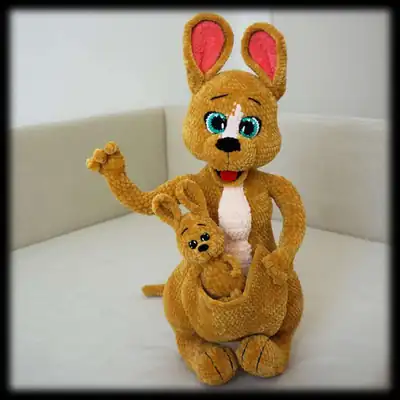
HowTo Amigurumi
Free Crochet Pattern
Beautiful Detailed Adorable

Kangaroo Amigurumi Pattern

Kangaroo amigurumi main body in brown velvet yarn
4.8Rating
12-15 HoursTime
AdvancedSkill
Highlights

What makes it special

Cute Companion

An adorable friend to cherish, handcrafted with love to bring comfort and joy for years to come.

Multi-Day Project

A rewarding 12+ hour journey—perfect for dedicated crafters who love detailed work and a large, expressive amigurumi that stands out on the shelf.

Advanced Level

This pattern is ideal for experienced crocheters who enjoy intricate shaping, working in the round, color changes, stuffing precision, and careful seaming to create a life-like mother and joey pair.

If you ever wanted to cradle a friendly marsupial in yarn, this Kangaroo Amigurumi Pattern brings a playful presence to life. The project is marked Advanced, designed for crocheters who enjoy shaping and posing a chunky, cuddly figure. You’ll start with a magic ring to form the sturdy core, then work in rounds to build a tall, buoyant body. With bulky #5 Himalaya Dolphin Baby yarn in a rich brown, the texture reads warm and inviting, perfect for a child’s companion or a cozy display piece. The finished size is approximately 55 cm tall, giving it a bold presence in any playroom or shelf.

In the pattern notes I emphasize invisible decreases and precise color placement to keep the kangaroo’s lines clean. The color palette uses main color 80330 brown, belly 80353 light powder for contrast, muzzle details in 80311 black, tongue 80318 red, inner ear 80332 coral, and eye highlights in white 62. Tools include two hook sizes (3.5 mm and 3.0 mm), a yarn needle, stitch markers, and a length of polyester stuffing to achieve a plush, durable finish. If you enjoy a satisfying build that ends with a poseable tail and limbs, this is a perfect project for your skill level and creativity.

About This Kangaroo Amigurumi Pattern

From start to finish, this Kangaroo Amigurumi Pattern guides you through a complete sculpting journey that results in a tall, cuddly friend with an expressive face. The dimensions are anchored by a firm core created with a magic ring and a secure series of rounds, followed by gradually increasing sections that shape the torso, head, and long limbs in bulky yarn. Each piece is crocheted in a deliberate order so you can stuff and assemble without losing the neat silhouette, then joined with invisible seams that keep the lines clean.

The design accommodates poseable limbs with optional wire insertion, and the pouch area is shaped to cradle a tiny joey if you wish to add another decorative layer. Color decisions are mapped to the pattern: a rich brown body (80330) frames a soft belly (80353); small details use black (80311) for the nose, red (80318) for the tongue, coral (80332) for ear insides, and white (62) for eye highlights. The finished piece stands approximately 55 cm tall and is a striking statement in any craft room or children's corner.

The moment I started this Kangaroo Amigurumi with a magic ring, I knew it would test an advanced crocheter's patience and precision. Its long torso, bold hind legs, and flexible tail are built in careful rounds that reward steady counting and marking. Using bulky #5 yarn and two precise hook sizes—3.0 mm and 3.5 mm—lets you shape a sturdy 55 cm tall figure. Color changes are deliberate: a warm brown body, pale belly and muzzle, and tiny black accents come together through BLO and FLO techniques. I also love that the pattern invites optional wiring for posable limbs, so your kangaroo can pose with joey tucked in the pouch, and the polyester stuffing helps create a soft, cuddly feel.

The construction stays seamless by working in continuous rounds for the body, limbs, and tail, with polyester stuffing added gradually to keep the shape firm. Details like the lighter belly and muzzle are worked with color 80353 and 80311 to create soft contrast that reads in person and on camera. Invisible decreases keep the shaping smooth, while small stitches along the face hold eyes and nose in perfect alignment. The ears get inner color 80332 and outer shading, and the tongue in 80318 adds a playful pop. In assembly, pins guide the joints, the yarn needle hides every seam, and you can thread a 1 mm wire to make the limbs poseable—about 200 cm total length will do.

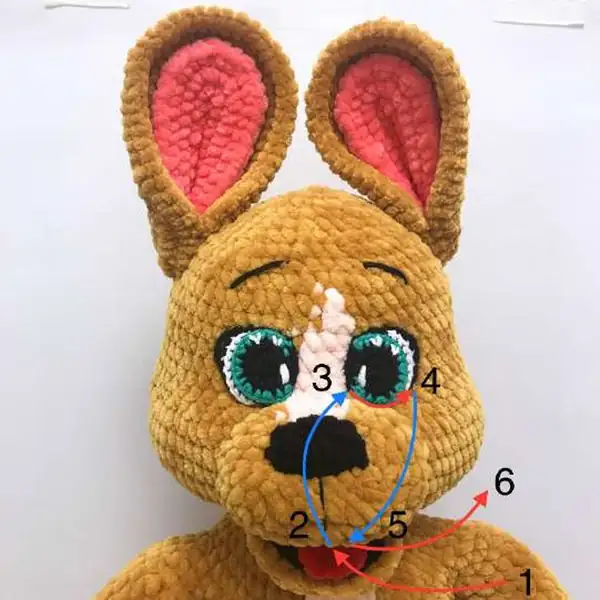
Expect a dedicated stretch of time—roughly 12 to 15 hours—so you can savor each round and the gradual reveal of the kangaroo’s character. I recommend marking each round so your increases and decreases stay aligned with the leg lines and tail curve. Texture stays consistent because the pattern emphasizes bold outer rounds and trickier invisible decreases in the head and neck. When you’re ready to finish, place the eyes and the nose using black Camtex thread, then add a tiny white highlight with color 62 for life-like sparkle. This pattern is free and designed to teach you new skills while yielding a durable, cuddle-worthy finished toy.
Close-up of kangaroo face with embroidered features

For makers who love a challenge, this pattern rewards patience with precise sculpting that feels almost magical in the finished piece. The kangaroo’s long limbs and tail require careful stuffing and placement of wires if you choose to make them posable, and I guide you through the transition from the muzzle to the head with subtle color changes and micro-decreases that keep the jawline clean. The pouch is shaped with a soft curve and a tiny joey can be added by crocheting a smaller circle or a mini body stuffed to shape. Expect to spend substantial time on each limb and the tail to keep their proportions true and the overall balance stable. Finishing touches—tightening the eyes, sculpting the mouth, and ensuring a gentle arch in the back—are what elevate this from a toy to a treasured keepsake.

Careful attention to tension and stitch placement ensures the outer fabric remains plush rather than stiff. Position markers help you track increases and decreases, preventing drift as you move from rounds to shaping. If you choose to insert a light wire, you’ll want to thread it through the limbs before final assembly to maintain a natural bend. I also recommend testing the stuffing density in a small swatch inside the leg before filling the whole limb. By the end you’ll have a majestic kangaroo whose proportions align with the finished size of approximately 55 cm tall, with a sturdy but cuddly feel. Color choices can reflect a family of kangaroos, from warm browns to richer tan hues.
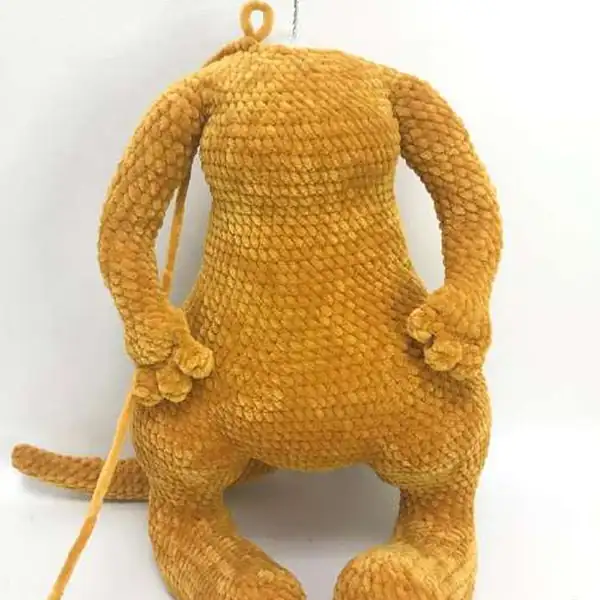
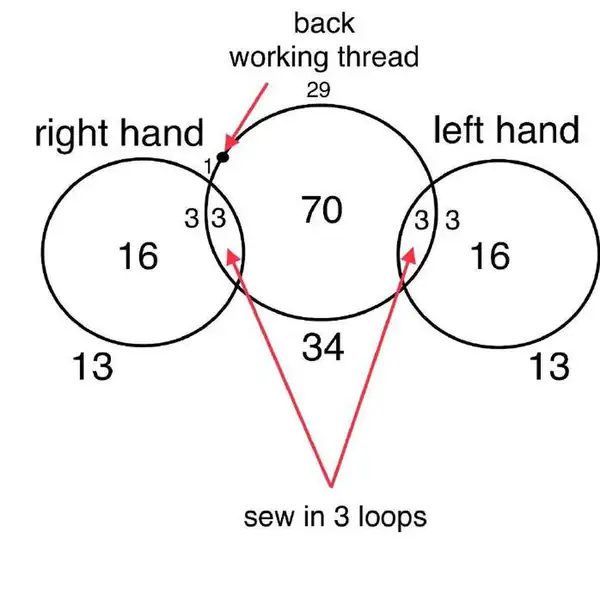
Stitches & Skills You'll Use

At the heart of this design is the MR followed by a careful progression of SC stitches to build the core. I use INC and DEC to shape the head and neck, letting increases imply gentle cheeks and a rounded muzzle. The limbs are worked in rounds with BLO to keep the arm and leg surfaces dense, while the tail gets a slightly looser texture with FLO to form a pleasing curve. Every color transition is deliberate: the belly patch uses the lighter 80353 to pop against 80330, and the ear inner 80332 adds that tiny pop of coral. The nose and fine accents in 80311 and 80318 sit on the face with small slip-stitch runs to avoid bulky seams. I include guidance for eye placement and highlights in white 62 to capture life in the gaze. You’ll also see tips for invisible decreases around the muzzle and around the paws to keep lines smooth.

Stitch control matters: maintain even tension across rounds, set aside markers at key join points, and use a sharp tapestry needle to tuck ends. Assembling this kangaroo (especially the long tail) benefits from pinning first, then sewing with small whip stitches to hide the joins. If you want extra durability for a child’s toy, you can reinforce the joints from the inside with a tiny amount of extra stuffing before closing. Throughout, remember that bulky yarn forgivingly shows texture, but consistent tension ensures the silhouette remains elegant rather than blobby.

My final tip: don’t rush the color changes. Pause at each transition to snug the floats and weave in ends before moving to the next section. With patient hands, you’ll preserve the crisp lines that make the Kangaroo Amigurumi Pattern look both professional and irresistibly huggable.

Why You'll Love This Kangaroo Amigurumi Pattern

If you crave a project that pushes your technique without overwhelming you, this Kangaroo Amigurumi delivers depth with clarity. The design uses the magic ring method and staggered rounds to build a sturdy body and expressive face. You’ll practice invisible decreases, BLO and FLO texture, and careful limb joining to keep every seam discreet. Finished size around 55 cm tall makes it a striking display piece that still fits on a shelf and in a lap. This is a true learning pattern, designed for advanced crocheters who want to push their skills in a single, satisfying project.

I love how the instructions balance challenge with rewarding payoff, and the photo-friendly texture shows off every stitch. The step-by-step notes, tips on color changes, and assembly guidance help you stay on track from MR to FO. You'll gain confidence with posable limbs by following the optional wiring step and learning how to tuck the joints into the body. Tips on color placement and eyelid detailing ensure your kangaroo looks lively in both daylight and photography. Because the pattern is free, you can focus on skill-building and take your time mastering the technique.

If you’re teaching yourself crochet, this pattern rewards persistence with a tangible, impressive result. I’ve designed it to translate well into social media posts and clear tutorial photos that highlight the ear shading and muzzle blend. The finished piece from this plan is sturdy, cuddle-worthy, and photograph-ready, making it perfect for gifts or display. Learning to shape the pouch region and to balance limbs teaches patience while offering a big payoff. I’m happy this pattern is freely available, inviting more crocheters to celebrate the craft and share variations.

Colour & Yarn Inspiration

When I design color stories, the main body color 80330 in brown instantly grounds the Amigurumi and makes the features pop. Pairing it with 80353 for the belly creates a gentle contrast that photographs beautifully in natural light. The muzzle, nose, eyes, and tiny accents rely on 80311 black and 80332 coral to define expression. I also use 62 white for eye highlights to add sparkle and bring the face to life. You can experiment by introducing a cooler shade for the body or a warmer belly to shift the mood without losing the overall silhouette.

If you want a winter version, switch to lighter creams and soft grays, keeping the inner ear color consistent for depth. A summer palette might swap to brighter ochres and peach, while keeping the same facial features. For a playful duo, toy with coordinating tones across body and belly so both pieces read as a family. Remember that higher contrast makes the eyes, nose, and mouth stand out even in dim light. The color palette in this pattern is designed to be forgiving, so you can try several combinations without losing the recognizable kangaroo shape.

If you’re aiming for a realistic joey look, consider a lighter belly with a darker body and minimal shading to keep the silhouette clear. Seasonal hues—rich browns in autumn, sandy tones in summer—help you tell stories with a single amigurumi. I like to test color placement by photographing a rough color storyboard before starting the actual crochet. When in doubt, keep the inner ear color and tongue accent consistent to preserve the friendly face you see in pictures. As you finalize color choices, document your palette notes so future projects can reuse your successful combinations.

Finished kangaroo amigurumi posed for display

Switch Things Up

If you’re the kind of crocheter who loves to tailor patterns, switching this Kangaroo Amigurumi’s size and weight will be a delightful exercise. Start by swapping the main bulky body yarn with a lighter worsted weight to scale the figure down while keeping the same proportions. Alternatively, you can push the project toward the original bulky feel by sticking with #5 yarn and using a slightly smaller hook to preserve the height. I find that using 3.0 mm or 3.5 mm hooks can alter the stitch density enough to keep the limbs and belly crisp. These tweaks let you adapt the Kangaroo to different scales, spaces, and sofa corners without changing the core shape.

Color is another area to switch up, and you can still honor the pattern’s anatomy. Try a caramel-brown main and a lighter belly, or go bold with a grey body and a creamy belly; the muzzle and inner ears respond beautifully to contrast. Swap in coral for the inner ear or pink for the tongue to give the same personality with different vibes. For photography or gifting, you might pair two tones to create a natural siblings set. Just remember to keep the belly color a few shades lighter than the body to maintain the kangaroo’s readable silhouette.

If you want a pocket-sized joey, a mini version can be introduced by scaling down the limbs and simplifying the head shaping. Poseable limbs become even more expressive when you adjust the wire length and insert stoppers at shoulder joints. Alternatively, skip the wire for a softer toy and rely on careful stuffing and incremental decreases to maintain form. The same MR-to-FO flow guides you through the modification, ensuring the kangaroo still balances in a natural stance. I often encourage testers to test balance by placing it on a flat surface before final assembly.

Another switch-up is to graft a tail extension to mimic a larger animal or to shorten it for a more compact silhouette. Using a different ear shape—shorter, rounder, more upright—changes the character while keeping the overall proportions intact. In addition, you can experiment with safety eyes versus embroidery, depending on the recipient’s age and safety needs. If you’re sharing photos online, I recommend documenting each phase—round by round—to help others see how the shape evolves. The aim is to honor the original kangaroo anatomy while offering flexible options for your own textile storytelling.

Ways to Use & Gift It

This Kangaroo Amigurumi makes a memorable gift for kids, new parents, or vintage toy lovers who appreciate handmade softness. Its tall 55 cm presence can become a centerpiece on a shelf, in a nursery, or as a playful companion in photos. Wrap it with a little care guide inside and a tag explaining the MR, BLO, and neck shaping to celebrate the craft. Because the pattern is free, you can personalize the colorway and pose before gifting, adding a personal note. For babies, consider omitting small parts during display and keeping the wire optional to avoid hazards.

Make it a baby shower gift with a coordinating colorful blanket and a soft pouch for the joey. Photograph it in a bright corner to highlight the texture of the belly and the contrast of muzzle against fur. You can include a mini care card that explains how to spot-clean, fluff, and store the toy. This crocheted kangaroo begs to be loved and passed down, especially when you share the backstory of the pattern being free. Gift-givers will appreciate the ability to adapt colors for family resemblances and seasonal themes.

Teacher appreciation gifts can be reimagined as classroom mascots, with a second joey in a tiny pouch for each student. Add a small tag with care instructions and the name of the recipient to elevate the presentation. Holiday gift exchanges welcome a pair of contrasting color schemes so siblings can claim their own cuddly kangaroos. For the crafter in your life, offer a free pattern as the base and a custom color consult as a bonus. In any case, the joy of giving grows when your handmade sculpture arrives in a gift-ready package.

Common Mistakes & How to Fix Them

Incorrect stuffing balance; fix by adding small amounts gradually and repositioning as you sew pieces together. Not aligning the pouch and legs before sewing; mark attachment points and test-fit the parts to avoid misalignment. Skimming color changes at the head and face; exact placement of white and black details creates better expression. Forgetting to weave in ends before final assembly; secure ends as you go to prevent shifting. Over-tightening the seams during assembly; maintain gentle tension to preserve plush texture and round shapes.

Maker's Notes

I test this pattern with the stated bulky yarn and the two hook sizes to confirm stitch density and overall height. I also verify that the chest and belly areas display a gentle transition when switching from BLO in the limbs to FLO in the belly, ensuring the surface remains plush yet dense enough to hold shape. My tests include several rounds of stuffing density in the limbs, tail, and pouch to prevent flat spots that can distort the silhouette over time. If you’re using wire for poseable limbs, I recommend feeding the wires through before final stitching and securing with extra stitches around the joint areas to avoid shifting during posing. The final assembly focus is on invisible joins that disappear under the fur, so I cross-check each seam in strong natural light and adjust tension to minimize seam visibility. I also confirm that eye placement aligns with the brow line for a natural, friendly expression that reads well in photos and in person.

Throughout testing, I note how garter-ish edges can appear around the muzzle when tension is uneven; I adjust the decreases to keep a smooth contour. I mark turning points on the pattern with stitch markers to remind me where increases or decreases occur, especially around the neck and tail. For safety and durability, I finish with secure ends tucked under several stitches rather than just one pass, and I test gentle tugging to ensure joints don’t loosen with play. Finally, I document color-shifts and gauge notes so others can reproduce the exact look or tailor it to their own yarns without losing proportion.

In the end, the Kangaroo Amigurumi Pattern remains approachable for advanced crocheters who take pride in neat seams, clean shaping, and a truly endearing face. I love watching the face come together as the eyes and mouth are added, because those tiny details transform a simple ball of yarn into a character that can become a child’s favorite friend for years.

I tried a substitution: When substituting yarns, I test a similar bulky weight (category #5) to keep the height and density consistent. If you use a slightly thinner yarn, expect to add a few rounds to maintain the 55 cm tall silhouette, and you may need to adjust stuffing to avoid sagging. For eyes and facial features, I recommend fixed safety eyes or toy eyes in proportion to the head size; if substituting standard embroidery for eye details, I suggest using white 62 thread highlights to preserve the light reflection and life in the gaze.For those who don’t have the exact Himalaya Dolphin Baby colors, you can replace 80330 with any warm brown shade and keep the belly 80353 as a lighter accent. Ear inner 80332 coral can be swapped for any soft pink or peach to match your chosen palette, while the muzzle and nose can be re-colored with black 80311 and tongue 80318 for a friendly expression. In all substitutions, maintain the original technique—MR, SC, INC, DEC, BLO and FLO—so the proportions and texture remain faithful to the design.

Kangaroo Amigurumi Pattern

From start to finish, this Kangaroo Amigurumi Pattern guides you through a complete sculpting journey that results in a tall, cuddly friend with an expressive face. The dimensions are anchored by a firm core created with a magic ring and a secure series of rounds, followed by gradually increasing sections that shape the torso, head, and long limbs in bulky yarn. Each piece is crocheted in a deliberate order so you can stuff and assemble without losing the neat silhouette, then joined with invisible seams that keep the lines clean. The design accommodates poseable limbs with optional wire insertion, and the pouch area is shaped to cradle a tiny joey if you wish to add another decorative layer. Color decisions are mapped to the pattern: a rich brown body (80330) frames a soft belly (80353); small details use black (80311) for the nose, red (80318) for the tongue, coral (80332) for ear insides, and white (62) for eye highlights. The finished piece stands approximately 55 cm tall and is a striking statement in any craft room or children's corner.

Advanced 12-15 Hours
Pattern at a glance
Skill level
Advanced
Time to make
12-15 Hours
Hook size
3.0 mm (C/2) and 3.5 mm (US E)
Yarn weight
Bulky / #5
Finished size
Approx. 55 cm / 21.65 in tall
Gauge
Gauge is not critical; aim for a tight, even fabric so stuffing does not show. Approximate: 8-9 sc and 9-10 rows per 4x4 in square
Yarn used
Main color approximately 350-420 g; accent colors 40-60 g total; yarn weight Bulky / #5

Materials Needed

Main Fabric
  • 01
    Himalaya Dolphin Baby yarn, color 80330 (brown), main color, plenty for body and limbs
  • 02
    Color 80353 (color light powder) for belly and muzzle details
  • 03
    Color 80311 (black) for nose and fine accents
  • 04
    Color 80318 (red) for tongue/inner mouth accents
  • 05
    Color 80332 (coral) for ear inner details
  • 06
    Color 62 (white) for eyes highlights and additional detailing
  • 07
    Additional colors as needed for eyes and facial features
Tools Required
  • 01
    Crochet hooks size 3.5 mm (US E) and 3.0 mm (US D)
  • 02
    Yarn needle for sewing parts
  • 03
    Scissors
  • 04
    Stitch markers
  • 05
    Polyester stuffing
  • 06
    Wire for posable limbs (optional) - 1 mm, ~200 cm total
  • 07
    Pins for assembly
  • 08
    Black Camtex thread or similar for face detailing

— Part 1 :

Round 9: Stitch marker;

— Part 2 :

Round 6: round: 60 sc (60) – repeat 3 times;
Round 7: round: 60 sc (60) – repeat 3 times;
Round 8: round: 60 sc (60) – repeat 3 times;

— Part 3 :

Round 7: round: 108 sc (108) repeat 3 times, that is, we crochet 10 sc – on;
Round 8: round: 108 sc (108) repeat 3 times, that is, we crochet 10 sc – on;
Round 9: round: 108 sc (108) repeat 3 times, that is, we crochet 10 sc – on;

— Part 4 :

Round 20: round: 60 sc (60) – repeat 13 times;
Round 21: round: 60 sc (60) – repeat 13 times;
Round 22: round: 60 sc (60) – repeat 13 times;
Round 23: round: 60 sc (60) – repeat 13 times;
Round 24: round: 60 sc (60) – repeat 13 times;
Round 25: round: 60 sc (60) – repeat 13 times;
Round 26: round: 60 sc (60) – repeat 13 times;
Round 27: round: 60 sc (60) – repeat 13 times;
Round 28: round: 60 sc (60) – repeat 13 times;
Round 29: round: 60 sc (60) – repeat 13 times;
Round 30: round: 60 sc (60) – repeat 13 times;
Round 31: round: 60 sc (60) – repeat 13 times;
Round 32: round: 60 sc (60) – repeat 13 times;
Round 33: round: 70 sc (70) – repeat;
Round 34: round: 70 sc (70) – repeat;
Round 35: round: 70 sc (70) – repeat;
Round 36: round: 70 sc (70) – repeat;

— Part 5 :

Round 9: round: 10 sc (10) – repeat 3 times;
Round 10: round: 10 sc (10) – repeat 3 times;
Round 11: round: 10 sc (10) – repeat 3 times;
Round 13: round: 12 sc (12) – repeat 4 times;
Round 14: round: 12 sc (12) – repeat 4 times;
Round 15: round: 12 sc (12) – repeat 4 times;
Round 16: round: 12 sc (12) – repeat 4 times;
Round 18: round: 14 sc (14) – repeat 4 times;
Round 19: round: 14 sc (14) – repeat 4 times;
Round 20: round: 14 sc (14) – repeat 4 times;
Round 21: round: 14 sc (14) – repeat 4 times;
Round 23: round: 16 sc (16) – repeat 5 times;
Round 24: round: 16 sc (16) – repeat 5 times;
Round 25: round: 16 sc (16) – repeat 5 times;
Round 26: round: 16 sc (16) – repeat 5 times;
Round 27: round: 16 sc (16) – repeat 5 times;

— Part 6 :

Round 54: round: 80 sc (80) – repeat 4;
Round 55: round: 80 sc (80) – repeat 4;
Round 56: round: 80 sc (80) – repeat 4;
Round 57: round: 80 sc (80) – repeat 4;

— Part 7 :

Round 2: row: turn the work, ch1, 3 sc (4) – repeat 3 times;
Round 3: row: turn the work, ch1, 3 sc (4) – repeat 3 times;
Round 4: row: turn the work, ch1, 3 sc (4) – repeat 3 times;
Round 7: row: turn the work, ch1, 7 sc (8) – repeat 7 times;
Round 8: row: turn the work, ch1, 7 sc (8) – repeat 7 times;
Round 9: row: turn the work, ch1, 7 sc (8) – repeat 7 times;
Round 10: row: turn the work, ch1, 7 sc (8) – repeat 7 times;
Round 11: row: turn the work, ch1, 7 sc (8) – repeat 7 times;
Round 12: row: turn the work, ch1, 7 sc (8) – repeat 7 times;
Round 13: row: turn the work, ch1, 7 sc (8) – repeat 7 times;
Round 18: row: turn the work, ch1, 7 sc (8)
Round 19: row: turn the work, ch1, 7 sc (8)
Round 21: row: turn the work, ch1, 9 sc (10)
Round 22: row: turn the work, ch1, 9 sc (10)
Round 24: row: turn the work, ch1, 11 sc (12)
Round 25: row: turn the work, ch1, 11 sc (12)
Round 27: row: turn the work, ch1, 13 sc (14) – repeat 11 times;
Round 28: row: turn the work, ch1, 13 sc (14) – repeat 11 times;
Round 29: row: turn the work, ch1, 13 sc (14) – repeat 11 times;
Round 30: row: turn the work, ch1, 13 sc (14) – repeat 11 times;
Round 31: row: turn the work, ch1, 13 sc (14) – repeat 11 times;
Round 32: row: turn the work, ch1, 13 sc (14) – repeat 11 times;
Round 33: row: turn the work, ch1, 13 sc (14) – repeat 11 times;
Round 34: row: turn the work, ch1, 13 sc (14) – repeat 11 times;
Round 35: row: turn the work, ch1, 13 sc (14) – repeat 11 times;
Round 36: row: turn the work, ch1, 13 sc (14) – repeat 11 times;
Round 37: row: turn the work, ch1, 13 sc (14) – repeat 11 times;
Round 39: row: turn the work, ch1, 11 sc (12)
Round 40: row: turn the work, ch1, 11 sc (12)
Round 42: row: turn the work, ch1, 9 sc (10)
Round 43: row: turn the work, ch1, 9 sc (10)
Round 45: row: turn the work, ch1, 7 sc (8) – repeat 26 times;
Round 46: row: turn the work, ch1, 7 sc (8) – repeat 26 times;
Round 47: row: turn the work, ch1, 7 sc (8) – repeat 26 times;
Round 48: row: turn the work, ch1, 7 sc (8) – repeat 26 times;
Round 49: row: turn the work, ch1, 7 sc (8) – repeat 26 times;
Round 50: row: turn the work, ch1, 7 sc (8) – repeat 26 times;
Round 51: row: turn the work, ch1, 7 sc (8) – repeat 26 times;
Round 52: row: turn the work, ch1, 7 sc (8) – repeat 26 times;
Round 53: row: turn the work, ch1, 7 sc (8) – repeat 26 times;
Round 54: row: turn the work, ch1, 7 sc (8) – repeat 26 times;
Round 55: row: turn the work, ch1, 7 sc (8) – repeat 26 times;
Round 56: row: turn the work, ch1, 7 sc (8) – repeat 26 times;
Round 57: row: turn the work, ch1, 7 sc (8) – repeat 26 times;
Round 58: row: turn the work, ch1, 7 sc (8) – repeat 26 times;
Round 59: row: turn the work, ch1, 7 sc (8) – repeat 26 times;
Round 60: row: turn the work, ch1, 7 sc (8) – repeat 26 times;
Round 61: row: turn the work, ch1, 7 sc (8) – repeat 26 times;
Round 62: row: turn the work, ch1, 7 sc (8) – repeat 26 times;
Round 63: row: turn the work, ch1, 7 sc (8) – repeat 26 times;
Round 64: row: turn the work, ch1, 7 sc (8) – repeat 26 times;
Round 65: row: turn the work, ch1, 7 sc (8) – repeat 26 times;
Round 66: row: turn the work, ch1, 7 sc (8) – repeat 26 times;
Round 67: row: turn the work, ch1, 7 sc (8) – repeat 26 times;
Round 68: row: turn the work, ch1, 7 sc (8) – repeat 26 times;
Round 69: row: turn the work, ch1, 7 sc (8) – repeat 26 times;
Round 70: row: turn the work, ch1, 7 sc (8) – repeat 26 times;
Round 72: row: turn the work, ch1, 5 sc (6) – repeat 3 times;
Round 73: row: turn the work, ch1, 5 sc (6) – repeat 3 times;
Round 74: row: turn the work, ch1, 5 sc (6) – repeat 3 times;
Round 76: row: turn the work, ch1, 3 sc (4) – repeat 3 times;
Round 77: row: turn the work, ch1, 3 sc (4) – repeat 3 times;
Round 78: row: turn the work, ch1, 3 sc (4) – repeat 3 times;
Round 80: row: turn the work, ch1, 1 sc (2) – repeat 3 times;
Round 81: row: turn the work, ch1, 1 sc (2) – repeat 3 times;
Round 82: row: turn the work, ch1, 1 sc (2) – repeat 3 times;

— Part 8 :

Round 2: row: turn the work, ch1, 49 sc (50) – repeat 8 times;
Round 3: row: turn the work, ch1, 49 sc (50) – repeat 8 times;
Round 4: row: turn the work, ch1, 49 sc (50) – repeat 8 times;
Round 5: row: turn the work, ch1, 49 sc (50) – repeat 8 times;
Round 6: row: turn the work, ch1, 49 sc (50) – repeat 8 times;
Round 7: row: turn the work, ch1, 49 sc (50) – repeat 8 times;
Round 8: row: turn the work, ch1, 49 sc (50) – repeat 8 times;
Round 9: row: turn the work, ch1, 49 sc (50) – repeat 8 times;

— Part 9 :

Round 4: round: 24 sc (24)
Round 5: round: 24 sc (24)

— Part 10 :

Round 16: round: 24 sc (24)
Round 17: round: 24 sc (24)

— Part 11 :

Round 2: row: turn the work, ch1, 3 sc (4)
Round 3: row: turn the work, ch1, 3 sc (4)
Round 5: row: turn the work, ch1, 2 sc (3)
Round 6: row: turn the work, ch1, 2 sc (3)
Round 8: row: turn the work, ch1, 1 sc (2)
Round 9: row: turn the work, ch1, 1 sc (2)

Assembly Instructions

  1. Stuff each piece firmly before closing.
  2. Pin all parts in place and check the proportions against the photos.
  3. Sew parts on securely with matching yarn.
  4. Weave in all ends and shape the finished piece.

Important Notes

  • Mark round beginnings and count stitches frequently to maintain symmetry during increases and decreases.
  • Stuff gradually and evenly; shoving too much stuffing in early round can distort shaping.
  • Keep tension consistent across parts to ensure a balanced finished toy.
  • Manually align parts before sewing; double-check proportions with the photos or reference images.
  • Weave in ends as you go; it reduces finishing time and keeps yarn tails secure.

Thank you for exploring the Kangaroo Amigurumi Pattern with me. It’s a project that rewards patience, precision, and a love for characterful amigurumi. May your crochet hook bring this tall, cuddly marsupial to life with the same warmth and charm that I felt while designing it. Whether you keep it as a treasured friend or gift it to someone special, I hope the finished piece becomes a beloved part of your fabric storytelling. If you share photos of your kangaroo, I’d love to see how your color choices and limb poses express your own personality. Happy crocheting, and enjoy every stitch along the way as your kangaroo hops from the page into your home.

Good to know

You ask, we answer

The finished kangaroo measures approximately 55 cm tall when using the recommended yarn and hook size, with the joey nestled in the pouch.

Yes, you can use different yarn weights, but this will affect the final size and proportions. Choose a hook size that keeps the fabric dense enough to hold shape.

This pattern is advanced and best suited for crocheters comfortable with working in the round, color changes, limb assembly, and precise stuffing.

Most crocheters allocate 12-15 hours, though the time can vary based on experience, pace, and how precisely you want to finish the details.

No safety eyes are required for this version; the eyes and facial features are embroidered for a softer finish and safety during play.

Joey sitting in pouch with parent kangaroo
Join 100k+ crocheters

Get new free patterns, stitch tips and exclusive content in your inbox.