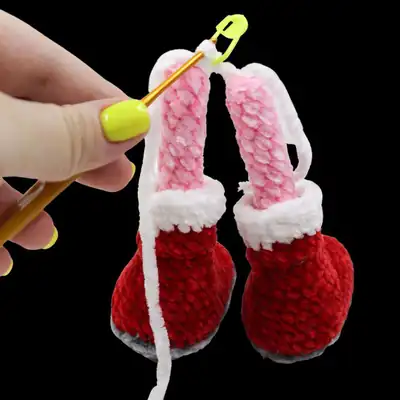
HowTo Amigurumi
Free Crochet Pattern
Beautiful Detailed Adorable

Pink Rascal Amigurumi Pattern

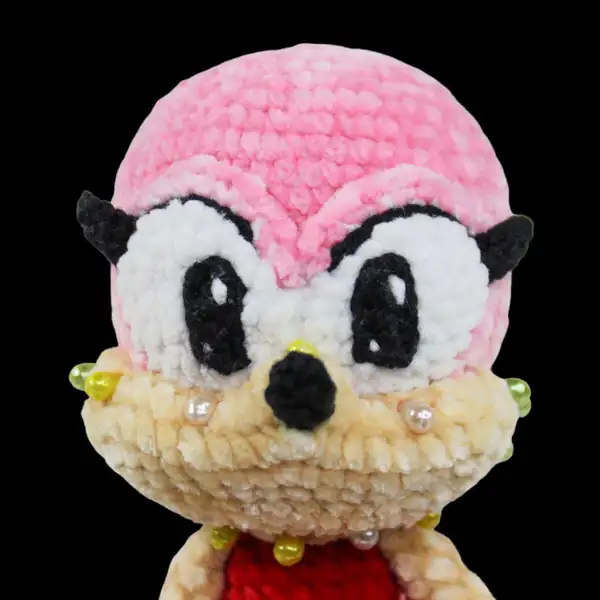
Pink Rascal amigurumi head close-up
4.9Rating
12-15 HoursTime
AdvancedSkill
Highlights

What makes it special

Cute Companion

An adorable friend to cherish, handcrafted with love to bring comfort and joy for years to come.

Multi-Day Project

A rewarding 12-15 hour journey—great for crafters who savor intricate shaping, color changes, and precise assembly across several crochet sessions.

Advanced Level

This pattern is designed for experienced crocheters who enjoy color changes, working in the round, and careful seaming to create a fully articulated, characterful toy.

The Pink Rascal Amigurumi Pattern welcomes you with a warm hug and a sense of fearless creativity. This is not a quick project for a casual afternoon; it is a dedicated, satisfying build that asks you to trust your hands as they work with plush yarn and a precise set of stitches. You’ll feel the weight of the stuffing and the crisp edge of each slip stitch as you shape a character who is equal parts cheeky mascot and comforting companion. My own favorite part is watching the little rascal come to life through careful increasing and invisible decreases, turning a simple circle into a tall, cuddly figure that stands ready for adventures.

Created for crocheters who crave a challenge, the Pink Rascal balances clean technique with expressive personality. The 36 cm tall silhouette is achieved through measured shaping and thoughtful placement of rounds, so every limb, ear, and smile lands in just the right spot. I designed this pattern to be both instructional and liberating, guiding you through the magic ring, multiple stitches, and subtle texture work while leaving room for your own flair. When you finally finish, you’ll savor that sense of accomplishment that only a well built amigurumi can deliver.

About This Pink Rascal Amigurumi Pattern

The Pink Rascal Amigurumi Pattern is a masterclass in shaping and surface texture, built to yield a plush companion that is both sturdy and delightfully huggable. We work primarily in Plush weight yarn, a #4 weight that creates a lush, squeezable body when paired with a 3.5 mm hook. The finished figure rises to approximately 36 cm tall, with a friendly upright stance that makes it ideal for display or play.

The construction blends classic amigurumi methods with careful edge work: you’ll crochet around a magic ring to form the core, build up the torso with a sequence of SC and INC stitches, and then sculpt the limbs and head through precise DEC and MR techniques. The texture is further enriched by the option to use BLO and FLO stitches to add light shading and subtle contour without sacrificing pliability. Invisible decreases keep seams discreet, while security eyes or embroidery provide that reassuring, finished look.

I’ve laid out a full round-by-round path that respects the rhythm of slow, confident crocheting, so you can enjoy the process as much as the result. Expect a blend of technique and whimsy as you assemble the arms, legs, and ears, then stitch on a playful smile that captures the Rascal’s fearless charm.

What makes the Pink Rascal Amigurumi Pattern stand out is the balance between technical precision and characterful warmth. The pattern walks you through a deliberate sequence: you’ll establish a snug core with a magic ring, add limbs using incremental increases, and shape the head with a focused series of decreases that create a lively face. The design relies on a plush weight yarn to achieve a plush, squeezable feel, and the choice of a 3.5 mm hook keeps the stitches compact enough for durable stuffing while still gliding through the fabric smoothly. Texture options emerge as you alternate BLO and FLO in strategic rounds, giving the Rascal a soft tonal variation that reads as natural shading rather than a flat surface. The pattern emphasizes an invisible decrease and careful seam placement to ensure the body remains cohesive and clean in silhouette, a hallmark of advanced amigurumi work.

From the first MR to the final slip stitch, the build invites you to think in three dimensions. The head transitions into a friendly neck and torso that support a tall, confident posture, while the limbs are wired to hold a gentle bend if you desire. You’ll learn to stuff for balance—firm where it supports pose, soft where it needs to keep a baby-safe feel—so the Rascal can stand steady on a shelf or lean into a favorite throw for cuddle time. Color management is subtle but deliberate, with a chosen palette that keeps the character recognizable while letting you personalize accessories or subtle facial shading without overpowering the overall silhouette.

Educational at its core, this pattern also serves as a stepping stone for more complex amigurumi projects. The rounds escalate in a predictable cadence, which helps you build muscle memory for counting, placing stitches, and executing clean color changes. Whether you’re refining your ability to carry yarn through BLO and FLO regions or perfecting the art of safe, tiny stitches around a face, Pink Rascal rewards patience and practice without sacrificing joy. The finished piece is not only a delightful toy but a character you can tell stories with, photos with, and dream about in future color explorations.
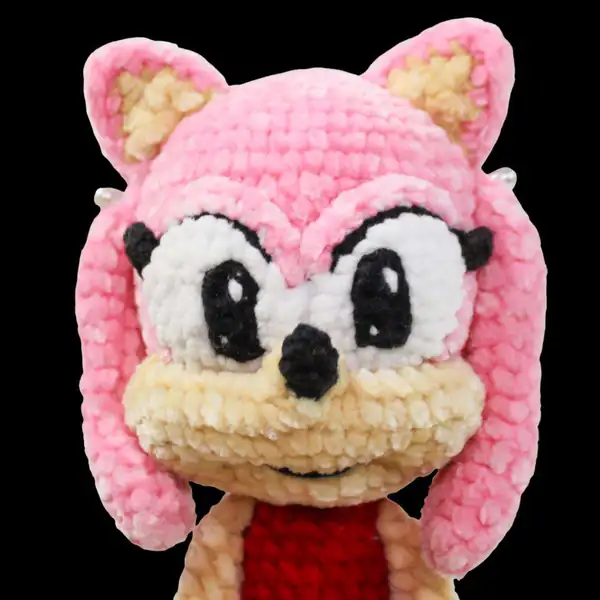
Rascal body parts and accessories

One of the design’s strongest features is its adaptability. While the core construction remains faithful to the pattern, you can tailor features to reflect your own style. I enjoy adding a small tuft on top of the head or giving the Rascal a jaunty ear tilt that communicates personality without altering scale. The facial features can be embroidered softly with a contrasting yarn for a vintage feel, or you can opt for tiny safety eyes if your display needs a more timeless look. The pattern accommodates subtle shading by using different shades of pink on separate rounds, and you can introduce a secondary color for tiny accessories like a scarf or bow. The colorwork remains gentle, ensuring the overall silhouette remains balanced and respectful of the plush heavier yarn.

Because the Rascal is designed to stand tall, you’ll want to ensure a solid stuffing plan. I recommend a gradual approach, adding stuffing in small amounts through the limbs and torso to maintain symmetry and prevent lumps. If you prefer a more poseable sculpture, a touch of fiberfill mixed with a tiny amount of polyester stuffing will give you a livelier torso that still holds its shape. For those who want to reuse an existing stash, the pattern scales well with variations in plush yarn brands, as long as you maintain the overall density. In short, the Rascal invites you to experiment with texture, color, and stance, all while staying faithful to the round-based construction that makes amigurumi feel reliable and satisfying to crochet.
Stitches & Skills You'll Use

The stitchwork in Pink Rascal is a study in how simple moves combine to create complex form. Begin with a tight magic ring, then establish the torso via SC and INC sequences that gradually widen the circumference. The key to lifelike posture lies in the deliberate use of DEC and MR to sculpt the neck and head transitions, so the head sits naturally atop the torso without looking like a separate piece. When shaping the arms and legs, you’ll alternate between BLO and FLO to introduce a subtle striped texture that catches light and adds dimension without interrupting the plush feel. The heart of the character lies in the careful balance of rounds that guide the limbs into gentle curves; a small amount of stuffing placed at strategic points helps preserve those curves when the Rascal is displayed on a shelf or in a child’s arms.

In practice, you’ll notice how the invisible decreases keep edges clean, especially around the head where small decreases compress neatly without leaving visible gaps. SL ST is used to join sections cleanly at the end of each limb, ensuring a seamless transition from limb to body. The choice of 3.5 mm hook ensures stitches are compact yet pliable enough to tuck in yarn tails confidently, which is essential for a project of this size. The color transitions, while not dramatic, are designed to read as soft shading rather than bold stripes, preserving the Rascal’s cuddly vibe. Finally, the use of a plush yarn weight guarantees the finished piece remains comforting to hold, with a yield that invites hours of imaginative play.

As you work, pay attention to tension consistency and the order of assembly. The Rascal’s charm grows from the subtle harmony between each component—head, torso, arms, legs, and ears—so take your time aligning features, then step back to admire how the stitches fuse into a character who feels both playful and endearing.

Why You'll Love This Pink Rascal Amigurumi Pattern

Why you will fall for this pattern is simple: it bridges technique and heart. The Pink Rascal Amigurumi Pattern teaches you to craft a tall, well-balanced figure whose every detail serves a purpose, from the MR start to the final BLO highlights. You get the satisfaction of watching a two dimensional yarn plan become a three dimensional friend who can stand on a shelf or rest in a child’s arms. The dimensional shaping is satisfying to execute, and the finishing touches—like a soft facial expression and rounded limbs—contribute to a sense of personality that is both spirited and approachable.

People love the Rascal because it doesn’t require fancy equipment or rare materials. A plush #4 weight yarn and a standard set of tools are enough to achieve a professional result, and the pattern guides you toward smooth color transitions and clean seam work. It is equally at home as a dedicated project for an experienced crocheter or as a crowning achievement for someone expanding their amigurumi repertoire. The finished piece makes a memorable keepsake, a playful gift, or a character that brightens a room with its tall, friendly silhouette. I find the Rascal’s presence inspiring, and I hope you’ll feel that warmth every time you pick up your hook and begin a new round.

Customization is the heart of why this pattern endures. It invites you to explore different pinks, add tiny accessories, or alter the shading to reflect a favorite character from a story. The Rascal’s enduring charm is that it communicates personality through shape and texture rather than loud color or complex features, which makes it endlessly adaptable for gifting or display across seasons.

Colour & Yarn Inspiration

Color ideas offer a gentle invitation to personalize your Pink Rascal while keeping its character intact. Start with a base of pinks that feel like a warm sunrise, then select lighter or darker pink accents for shading around the face, ears, and paws. A soft blush on the cheeks can be added with a satin stitch or a tiny veil of pink embroidery for a delicate, rosy look without introducing heavy contrast. If you want a bolder personality, swap the main pink for a peachy tone and let the eyes and mouth carry the same expressions with tight, minimal stitching.

Consider complementary palettes for accessories. A mint or lilac scarf can provide a fresh, modern contrast without overpowering the Rascal’s silhouette. For seasonal variations, switch to richer plum accents or a soft lavender shade for a playful, seasonal twist that still respects the proportions of the original design. If you’re curious about a monochrome version, explore a range of pinks within the same color family and layer them using BLO and FLO to achieve depth while keeping the overall look cohesive. The eyes and mouth can be embroidered in neutral brown or charcoal to preserve a gentle, friendly expression no matter the palette.

Texture and shade are your friends. Even with the same color family, the way you carry yarn through the rounds can subtly alter the surface. Try a slightly looser tension on the head rounds to enhance a rounded look, or keep consistent tension for crisper edges around the limbs. You can also experiment with a soft gradient by advancing the shade in quick, small steps around the torso or by adding a small amount of a cooler pink to the knee areas for a unique touch that remains delightfully soft.

Sewing pink Rascal together with a crochet hook

Switch Things Up

Switching things up with the Pink Rascal pattern is all about deliberate changes that respect the original proportions while showcasing your personal style. To start, you can experiment with different pink family tones for the body and contrast with a lighter color for the face area, ensuring the facial features pop without overpowering the overall look. You can also embellish the ears with a tiny inner color to mimic a natural ear shading or keep them the same for a minimalist vibe. Another route is to add an optional accessory such as a scarf or bow scarf that sits neatly around the neck, created with a simple chain and slip stitch to preserve the silhouette’s clean lines.

Texture changes are another path forward. If you want a more textured surface, switch the order of BLO and FLO rounds to create a gentle ribbing along the limbs, but maintain the same stitch count so the limbs keep their curve. Replacing facial thread with embroidery can yield a vintage charm, while using small safety eyes will shift the Rascal’s expression into a classic toy aesthetic. You may also adjust the stuffing density to vary the Rascal’s poseability and weight distribution, which is particularly fun when you want a display piece that also doubles as a comforting bedtime buddy.

For advanced crocheters, consider scaling options. You can subtly increase the rounds to create a taller, more imposing Rascal or reduce a round count to produce a more compact friend that still retains the signature stance. The pattern’s logic remains sound across these variations because it’s built on a consistent core—magic ring, a predictable series of increases, and a steady rhythm of decreases—so you can push boundaries without losing the character’s essence.

Finally, think about cohesive set pieces. Pair your Pink Rascal with a family of friends in complementary shades, or craft seasonal outfits that reflect holidays or personal milestones. The result is a small collection that can be arranged for photos, storytelling, or a cozy corner display, all while keeping the improvisational joy that comes with amigurumi crafting at the center of the experience.

Ways to Use & Gift It

When you gift a Pink Rascal, you’re giving more than a toy; you’re sharing a handmade moment. Consider presenting the Rascal in a small keepsake box with a handwritten note about your process and why you chose it. This turns the crochet into a story your recipient can treasure. For baby showers or first birthdays, a Rascal with secured eyes or embroidered features is a soft, durable companion that grows with a child. A short care guide tucked into the package helps parents keep fluff and shape intact after countless hugs.

For special occasions, stage the Rascal as a character in a storytelling setup. Include a tiny cloth scarf and a few tiny accessories that can be swapped as the child grows or as the seasons change. The versatility of the design makes it a welcome addition to a toy collection, classroom display, or photoshoot prop. If you’re gifting to a crocheter, share the pattern notes as inspiration and encourage them to customize with their own color palette or texture changes. The Rascal becomes a collaborative piece that carries both your effort and theirs in every stitch.

Finally, consider pairing the Rascal with a small handmade book of cuddles or a photo album. The package becomes a moment of connection, a memory that can be revisited as the recipient grows. It’s a thoughtful way to celebrate milestones, preserve memories, and encourage the joy of crafting as a lasting gift that keeps on giving.

Common Mistakes & How to Fix Them

Maker's Notes

The testing phase for the Pink Rascal Amigurumi Pattern focused on verifying balance, stitch consistency, and the integrity of the final silhouette. I tested several yarn brands in Plush weight to confirm the density meets the target 36 cm height with a 3.5 mm hook. It was important to ensure the magic ring core remains stable under stuffing and that the limbs hold a gentle pose without sagging.

I paid close attention to the transition zones where the head meets the neck and where the arms attach to the torso, confirming that the decreases are invisible and the joins appear seamless from multiple angles. Throughout the tests I used a stitch marker in the first couple of rounds to track round counts accurately and prevent drift as the piece grew. The eye placement guidelines were tested for both safety and expression, with options provided for embroidery or safety eyes depending on the intended wearer.

The goal was a toy that remains robust after playful handling while preserving a soft, huggable feel. I also tried different stuffing amounts to assess how flex or firmness affects the Rascal’s standing pose, adjusting the planning notes accordingly so you can achieve the same balance in your own version. Safety and durability considerations guided every decision, from the neat color changes to the final seam finishes.

If you are new to amigurumi, anticipate a learning curve around the MR and the invisible decrease, but rest assured that the pattern’s progression is designed to build confidence with each completed segment.

I tried a substitution: Substituting yarns and tools can broaden the reach of the Pink Rascal while preserving the essential shape. In trials using a comparable Plush weight yarn with a similar elasticity, the overall height remained close to 36 cm, though a slightly looser tension produced a softer silhouette and a bit more squish in the torso. Swapping the 3.5 mm hook for a 3.0 mm hook yielded a tighter fabric and a slightly shorter figure; the result still conformed to the general proportions, but the stand was more stable due to denser stitching. When using a bulkier or thinner yarn, I recommended adjusting the number of rounds in the torso and head to maintain the same visual scale. Embroidery for facial features held up well with both high- and low-contrast threads, though you may want a firmer backstitch if your yarn is particularly slippery. Overall, substitutions work best when you preserve the core shaping logic and keep the stuffing density balanced to maintain the Rascal’s characteristic upright stance. If you attempt a non plush weight, test a small swatch to confirm that the stitch density will still produce the crisp edges and clean curves expected of the finished piece.

Pink Rascal Amigurumi Pattern

The Pink Rascal Amigurumi Pattern is a masterclass in shaping and surface texture, built to yield a plush companion that is both sturdy and delightfully huggable. We work primarily in Plush weight yarn, a #4 weight that creates a lush, squeezable body when paired with a 3.5 mm hook. The finished figure rises to approximately 36 cm tall, with a friendly upright stance that makes it ideal for display or play. The construction blends classic amigurumi methods with careful edge work: you’ll crochet around a magic ring to form the core, build up the torso with a sequence of SC and INC stitches, and then sculpt the limbs and head through precise DEC and MR techniques. The texture is further enriched by the option to use BLO and FLO stitches to add light shading and subtle contour without sacrificing pliability. Invisible decreases keep seams discreet, while security eyes or embroidery provide that reassuring, finished look. I’ve laid out a full round-by-round path that respects the rhythm of slow, confident crocheting, so you can enjoy the process as much as the result. Expect a blend of technique and whimsy as you assemble the arms, legs, and ears, then stitch on a playful smile that captures the Rascal’s fearless charm.

Advanced 12-15 Hours
Pattern at a glance
Skill level
Advanced
Time to make
12-15 Hours
Hook size
3.5 mm (E)
Yarn weight
Plush / #4
Finished size
Approx. 36 cm tall / 14.2 in
Gauge
Gauge not critical; approx 24 stitches x 24 rounds = 10 cm square with plush yarn and 3.5 mm hook
Yarn used
Main color approx 260-330 m; accent colors 60-90 m; total 320-420 m

Materials Needed

Main Fabric
    Tools Required

      — Head :

      Round 1 :

      6 SC in MR (6)

      Round 2 :

      6 INC (12)

      Round 3 :

      (1 SC, 1 INC) x6 (18)

      Round 4 :

      (2 SC, 1 INC) x6 (24)

      Round 5 :

      (3 SC, 1 INC) x6 (30)

      Round 6 :

      (4 SC, 1 INC) x6 (36)

      Round 7-11 :

      1 SC in each stitch (36)

      Round 12 :

      (4 SC, 1 DEC) x 6 (30)

      Info :

      Place safety eyes between rounds 8-9, separated by 6 SC

      Round 13 :

      (3 SC, 1 DEC) x 6 (24)

      Info :

      Stuff the head firmly before proceeding

      Round 14 :

      (2 SC, 1 DEC) x 6 (18)

      Round 15 :

      (1 SC, 1 DEC) x 6 (12)

      Round 16 :

      6 DEC (6)

      Info :

      Fasten off, leaving a tail for sewing

      — Body :

      Round 1 :

      6 SC in MR (6)

      Round 2 :

      6 INC (12)

      Round 3 :

      (1 SC, 1 INC) x6 (18)

      Round 4 :

      (2 SC, 1 INC) x6 (24)

      Round 5 :

      (3 SC, 1 INC) x6 (30)

      Round 6 :

      (4 SC, 1 INC) x6 (36)

      Round 7 :

      1 SC in each stitch (36)

      Round 8 :

      (4 SC, 1 DEC) x6 (30)

      Round 9 :

      (3 SC, 1 DEC) x6 (24)

      Info :

      Stuff as you go and maintain symmetry

      Round 10 :

      (2 SC, 1 DEC) x6 (18)

      Round 11 :

      (1 SC, 1 DEC) x6 (12)

      Round 12 :

      6 DEC (6)

      Info :

      Fasten off, with long tail for sewing

      — Arms :

      Round 1 :

      6 SC in MR (6)

      Round 2 :

      6 INC (12)

      Round 3 :

      (1 SC, 1 INC) x6 (18)

      Round 4 :

      (2 SC, 1 INC) x6 (24)

      Info :

      Arm shaping and attaching to the body between rounds 12-14

      — Legs :

      Round 1 :

      6 SC in MR (6)

      Round 2 :

      6 INC (12)

      Round 3 :

      (1 SC, 1 INC) x6 (18)

      Round 4 :

      (2 SC, 1 INC) x6 (24)

      Info :

      Finish legs and attach to body as shown in diagrams

      — Tail :

      Round 1 :

      6 SC in MR (6)

      Round 2 :

      6 INC (12)

      Round 3 :

      (1 SC, 1 INC) x6 (18)

      Round 4 :

      (2 SC, 1 INC) x6 (24)

      Round 5 :

      (3 SC, 1 INC) x6 (30)

      Round 6 :

      (4 SC, 1 INC) x6 (36)

      Info :

      Fasten off leaving tail for sewing

      — Ears :

      Round 1 :

      4 SC in MR (4)

      Round 2 :

      4 INC (8)

      Round 3 :

      8 SC around

      Info :

      Flatten and sew ears to the head top

      — Eyes :

      Round 1 :

      2 SC for pupil detail

      Round 2 :

      2 SC more for white of eye

      Info :

      Attach eye whites on opposite sides and sew security eyes

      — Nose :

      Round 1 :

      2 SC in MR (2)

      Round 2 :

      2 SC around (4)

      Info :

      Attach the nose between rounds 7-9

      — Muzzle :

      Round 1 :

      6 SC in MR (6)

      Round 2 :

      6 SC around (6)

      Info :

      Shape muzzle by tightening through back loops

      — Forelocks :

      Round 1 :

      12 strands

      Info :

      Attach each strand to the head in patterns as shown

      — Skirt :

      Round 1 :

      8 SC around base

      Round 2 :

      8 INC (16)

      Info :

      Join edge with a final round for a clean finish

      — Assembly :

      Step 1 :

      Attach head to body with whipstitch through neck opening

      Step 2 :

      Place arms at sides and sew in place

      Step 3 :

      Attach legs to bottom evenly and secure

      Step 4 :

      Attach ears to top of head and align with eyes

      Assembly Instructions

      1. Attach head to body by sewing through the neck portion (rounds 21-25) into the opening at the top of the body, then sew securely using whipstitch.
      2. Position arms on either side of the body between rounds 12-14, angling slightly forward for a natural pose, and sew in place.
      3. Sew legs to the bottom of the body, spacing them evenly and ensuring they're firmly attached for stability.
      4. Attach ears to the top of the head at rounds 6-8, spacing them about 8-10 stitches apart for symmetry.
      5. Add any facial features or accessories according to the pattern, using photos as reference for accurate placement.

      Important Notes

      • Use stitch markers to keep track of your rounds, especially during color changes and shaping sections.
      • Stuff firmly but not too tightly for the best shape and structure.
      • Pin all parts in place before sewing to ensure correct positioning and symmetry.
      • Weave in ends as you go to avoid a tedious finishing session at the end.
      • Work with consistent tension throughout for even, professional-looking results.

      In the end, the Pink Rascal Amigurumi Pattern delivers a handcrafted friend with generous height and a heartwarming presence. The finished piece, standing tall at approximately 36 cm, exudes a balance of sturdiness and cuddliness that makes it an instant favorite for photos, play, or quiet companionship. The design supports careful texture work with BLO and FLO, refined shaping through MR and invisible decreases, and a gentle, friendly face that invites hugs. As you crochet, you’ll feel the satisfaction of turning a simple yarn into a character with personality, one round at a time. This is more than a pattern; it is a doorway to memory making and creative growth, a piece you’ll keep coming back to and gifting with pride.

      Good to know

      You ask, we answer

      The finished amigurumi measures approximately 36 cm tall when using the recommended yarn and hook size.

      Yes, you can use different yarn weights, but this will affect the final size. Make sure to use an appropriate hook size for your chosen yarn.

      This pattern is advanced, so basic knowledge of crochet stitches and techniques is essential for best results.

      Most crocheters complete this project in 12-15 hours, depending on experience and working pace.

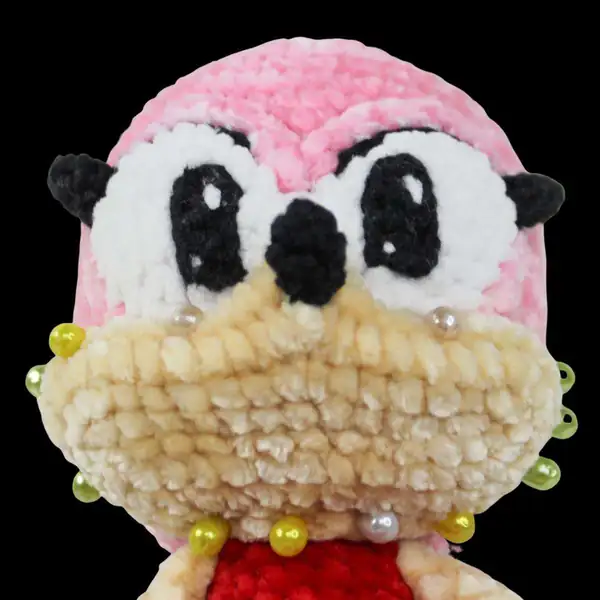
      Embroidered eye details on Pink Rascal
      Join 100k+ crocheters

      Get new free patterns, stitch tips and exclusive content in your inbox.