Crochetologist
Free Crochet Pattern
Beautiful Detailed Adorable

Mario Pattern Amigurumi Pattern

Mario amigurumi head close-up in beige yarn
4.7Rating
6-8 HoursTime
IntermediateSkill
Highlights

What makes it special

Made with Love

An adorable friend to cherish, handcrafted with love to bring comfort and joy for years to come.

All-Day Adventure

Takes 8-10 hours, ideal for a dedicated crochet session or a weekend project that yields a detailed, collectible character you’ll be proud to display.

Intermediate Level

This pattern sits at an intermediate level, requiring comfort with working in the round, executing increases and decreases, performing clean color changes, and performing careful seaming to maintain pose and durability. The project relies on a magic ring start, working in back loop only for specific shading, and precise embroidery for the facial features. It rewards organization, measuring rounds, and attention to stitch tension to ensure the head, torso, and limbs align proportionally. The addition of optional wire insertions for limited poseability adds a layer of planning, but is not required to complete a soft, friendly Mario.

Step into a pocket-sized world of classic gaming with this Mario amigurumi project. This guide invites a crocheter to bring a cuddly, poseable figure to life using crocheted parts, careful color changes, and a calm, methodical build. The finished figure sits invitingly on a shelf or desk, a tactile homage to the era of pixelated adventures.

The pattern is designed for crafters who are comfortable working in the round, making increases and decreases, changing colors, and sewing seams. It rewards thoughtful planning, steady gauge, and tidy finishing, with an emphasis on a soft silhouette and durable joints. You’ll start with a small starting tail, shape a head and body, attach limbs, and then add the cap, overalls, and the signature mustache.

Each element is crocheted and assembled with gentle handling of stuffing to preserve poseability and durability. This project is approachable for a dedicated hobbyist looking to capture a beloved character in yarn, and it offers a sense of accomplishment from start to finish.

About This Mario Pattern Amigurumi Pattern

This amigurumi pattern creates a pocket-sized Mario figure by combining classic crocheted shaping with character-specific details. The build unfolds in a measured sequence: start with a crocheted head that graduates into a sturdy torso, then attach arms and legs in a way that preserves balance and allows light posing. The cap sits atop the head with a brim that aligns to the facial features, while the blue overalls are formed with careful color changes and clean color transitions to prevent stuffing from showing through.

The mustache is shaped with subtle curves that give a hint of personality without overpowering the overall symmetry. The finished sculpture is typically small enough to be held in one hand, yet sturdy enough to stand or be displayed on a shelf. The pattern emphasizes consistency of stitch tension, control over stuffing density, and clean finishing techniques so seams stay flat and joints remain soft.

Optional wire insertions are included as a method to achieve limited poseability, but they are not required for a cheerful display. The assembly phase invites the crafter to refine eye placement, mouth shape, and cap alignment, so the character reads as expressive and true to the source without sacrificing durability. The project is designed to be counted and paced, rewarding meticulous counting of rounds and even distribution of stuffing to maintain a balanced silhouette.

The palette emphasizes bright primary colors and crisp contrasts to replicate Mario’s iconic look while allowing room for personal interpretation through alternative yarns or shades. Overall, the pattern offers a complete, self-contained journey from start to finish, with stepwise milestones that culminate in a finished, huggable figure that captures nostalgia and craft satisfaction in equal measure.

Mario Pattern is a complete amigurumi project featuring a head, torso, limbs, and an array of accessory details that recreate the classic video game character in yarn form. The pattern encourages careful color changes, precise color placement, and thoughtful assembly to ensure the character holds its pose well after completion. You’ll appreciate how the cap, overalls, and mustache come together using simple stitches, with emphasis on clean color transitions and neat finishing to prevent stuffing show-through. Every part is designed to be sewn with a light touch, so the final sculpture remains soft, resilient, and expressive. The pattern also includes optional wire insertions for posability and a few embellishments to intensify Mario’s iconic look.

As you progress, you’ll notice the rhythm of rounds and color transitions becomes a familiar cadence: a growing head, a sturdy body, then the limbs, and finally the accessories that give the character its personality. The project rewards precision—placing eyes between specific rounds, aligning the cap with the cap brim, and sewing seams with even tension. The learning curve is enjoyable rather than daunting, especially if you enjoy layering colors and shaping features to capture a character’s mood. By the end, you’ll have a charming figure that evokes both game nostalgia and the tangible thrill of a handmade treasure.

Mario cap and overalls with colorful buttons detail

Beyond the build itself, Mario Pattern invites you to experiment with palette choices while maintaining the cheerful essence of the character. You could swap the red for a maroon or the blue for teal to personalize your Mario, or you might try alternative skins for the cap and overalls to reflect a favorite game variant. The guide also includes tips for adjusting the scale by selecting different yarn weights and hook sizes, offering a path toward micro-Mario or a chibi-scale plush. Finally, the finishing touches—eye placement, mouth shape, and the sparkle of the cap badge—let you imprint your own signature on a classic character, making each completed piece a tiny study in character design.

Stitches & Skills You'll Use

Key techniques used in this project focus on accessible, everyday crocheting steps. Begin with a magic ring to form the first round of the head, then build outward with increases to shape the skull and cheeks. Use simple increases and decreases to establish the neck and shoulder areas, ensuring a smooth transition into the torso without lumps. When color changes are required, switch yarns between rounds with a clean cut and secure yarn tails. The cap and overalls rely on crisp color changes and tight color transitions to minimize gaps at seams. Embroidery of facial features remains minimal; placement is guided by round counts so that the eyes align horizontally and the mouth sits between them in a natural expression. The seam technique used for joining limbs to the torso emphasizes gentle tension rather than pulled, visible stitching, keeping the figure cuddly. If you opt to insert a light wire for poseability, thread it through the limbs before final assembly, then seal the ends to prevent poking. Finally, finish with careful weaving of tails and a neat fasten off to preserve a soft silhouette without visible ends.

Why You'll Love This Mario Pattern Amigurumi Pattern

This pattern rewards careful planning and steady technique. It showcases how simple crocheted pieces—when shaped and joined with care—can convey personality, emotion, and nostalgia. A thoughtful color plan, precise color placement, and careful finishing yield a figure that reads as both a faithful homage and a charming one-off creation.

The process emphasizes balance in stuffing, symmetry in facial features, and stability in joints, enabling a display-ready piece that remains cuddly and durable. The pattern invites experimentation with scale and color while maintaining the recognizable silhouette that fans expect, making each completed Mario feel personal and rewarding.

Colour & Yarn Inspiration

To keep Mario vibrant, choose crisp primary tones for the cap and overalls, pairing with a warm beige for skin and bright blue for the overalls. If you want a softer look, consider pastel shades of red and blue and a cream skin tone for a more vintage feel. Substituting hand-dyed yarn can create subtle variegations that add depth without altering proportions, and you can switch the hat badge color to white or pale gray for contrast. For a more whimsical take, try a metallic thread for button highlights or add enamel paint accents for tiny facial features for a collectible quality.

Wool blends and cottons behave differently when stuffed; cotton tends to hold its shape more, while wool blends can give a softer silhouette. If you’re new to yarn substitutions, start with a similar weight and plies to keep scale accurate and ensure safe finishing. Remember to adjust hook size to maintain the same density in your stitches, so the final Mario remains sturdy and cuddly rather than floppy. Color coordination and texture play will bring your personal touch to life in this classic character.

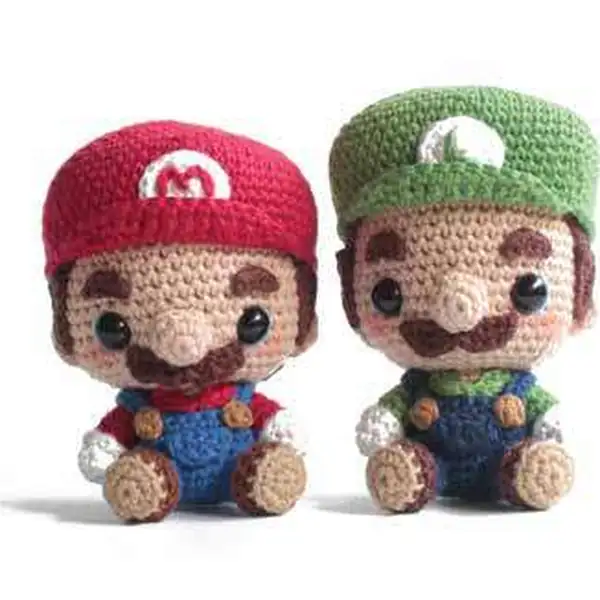
Fully stitched Mario amigurumi with posture on a white background

Switch Things Up

I love to customize the palette for a fresh take on this classic character. Swap red for maroon or azure for cobalt to give Mario your own signature vibe. Try a gradient blue for the overalls to add depth or use a speckled yarn for a playful texture. You can also experiment with different skin tones to reflect diverse inspirations while keeping the iconic hat red and cap badge white for contrast.

I also enjoy adjusting the scale by changing yarn weight and hook size; a lighter yarn with a smaller hook yields a tinier Mario that’s perfect for keychains or desk buddies, while a chunkier version becomes a cuddly display piece. In both cases, maintain proportion by rechecking the head-to-body ratio after each round of increases and decreases.

You could embellish with tiny embroidered details—like a mini mustache border or a stitched M emblem on the cap—to add personality. Try small fabric patches or felt accents for a sci‑fi or retro-gaming twist, but ensure these additions don’t compromise the stability of joints. Creative details like smiling eyes or a cheeky mouth can transform expression with minimal stitches.

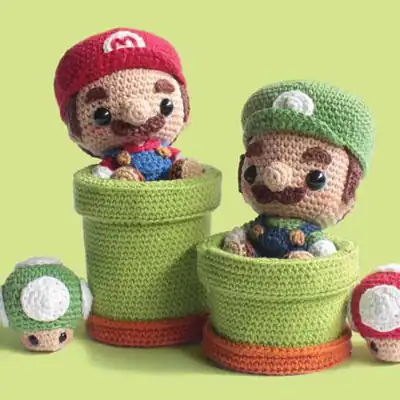
Think about posing opportunities: a standing Mario with one arm raised for a heroic vibe, or a seated Mario with legs folded as if resting after an epic level. If you want more action, you can wire the limbs at specific joints for light poseability without sacrificing softness. Finally, consider presenting Mario on a tiny mushroom stand or alongside a miniature pipe prop for a whimsical scene.

For gifting, package Mario in a little mushroom habitat or a small crochet pouch; the presentation elevates the handmade experience and makes the recipient feel extra special. You can also stitch a tiny scarf or cape as a seasonal accessory, turning your Mario into a collectible piece that works for holidays or birthdays. The options are endless when you start from a solid foundation and give yourself permission to experiment thoughtfully.

Ways to Use & Gift It

Gift Mario to a gamer friend as a quirky desk companion or a playful desk buddy for a home office. Its cheerful expression and sturdy finish make it an instant morale booster during long work or study sessions. You can also gift him as a birthday surprise for a child who loves retro video games, pairing him with a small mushroom plant for a cute display.

Display Mario on a bookshelf or work desk, where the combination of bright primary colors brings a pop of nostalgia to the room. The handmade quality adds sentimental value that digital gifts can’t match, and the tailoring in this pattern makes it feel like a personal creation instead of a store-bought toy. If you’re crafting for a friend who collects video game memorabilia, Mario can join a small display of other characters for a fun, themed vignette.

Common Mistakes & How to Fix Them

Skipping stitch markers at critical color changes can lead to misaligned rounds; place a marker at the start of every round to stay on track. Overstuffing the head causes pinched facial features; add stuffing gradually and test the head’s balance as you go. Inconsistent tension creates lumps under the clothing seams; maintain even tension and secure ends as you work. Skipping round counts during increases and decreases results in skewed shapes; recount after every round, especially at the head and limbs.

Maker's Notes

When this project was tested by a pattern tester group, many crafters found the most forgiving path to success came from working with a smooth, medium-weight yarn and a light-to-medium hook. A focused approach to eyes placement and neck seam alignment helped create a credible expression and stance. The process benefits from staged stuffing: begin with the head to establish balance, then gradually fill the torso and limbs to avoid stiff joints.

A few testers noted that a small amount of extra stuffing in the head improved upright posture, while others preferred a slightly looser neck seam for flexibility during posing. Photography of progress can aid in ensuring symmetry, especially when aligning cap brim and facial features. Overall, the project requires patience and careful counting of rounds to maintain proportionality across all parts.

I tried a substitution: Substituting DK weight yarn with a 3.5 mm hook reduced the overall height to approximately 9 cm, while maintaining recognizable form. Proportions shifted slightly; extra stuffing was added at the head to restore balance, and neck-area stitches were reinforced to mimic the original silhouette. When experimenting with different fiber contents, it’s important to keep the density similar to the original so the figure remains sturdy and cuddly rather than collapsible. If a heavier yarn is used, a slightly larger hook helps maintain the same stitch density and prevents the final piece from appearing bulky.

Mario Pattern Amigurumi Pattern

Make a cheerful Mario amigurumi with our free crochet pattern—step-by-step rounds, materials, and finishing tips. Download now and start stitching!

Intermediate 6-8 Hours
Pattern at a glance
Skill level
Intermediate
Time to make
6-8 Hours
Hook size
3.0 mm (C/2)
Yarn weight
Worsted / #4
Finished size
Approx. 12 cm tall / 4.7 in
Gauge
Approximately 18 stitches across 12 rounds in a 4-inch square using worsted weight yarn
Yarn used
Main color 150-180 g; accent colors 20-30 g total

Materials Needed

Main Fabric
  • 01
    Worsted weight yarn (#4) in Red for the body accents
  • 02
    Beige/tan yarn for skin tone details
  • 03
    Blue yarn for overalls (medium shade)
  • 04
    Black yarn for eyes and tiny details
  • 05
    White yarn for hands and pockets
  • 06
    Stitch markers, polyester stuffing, safety eyes, and a bias tape for facial features
Tools Required
  • 01
    Crochet hook size 3.0 mm (C/2) or 3.25 mm depending on tension
  • 02
    Yarn needle for sewing and weaving in ends
  • 03
    Stitch markers
  • 04
    Small scissors
  • 05
    Safety eyes and washer set (10 mm recommended for the body)
  • 06
    Polyester stuffing
  • 07
    Pins for assembly
  • 08
    Optional thin wire for posability in arms

— Head :

Round 1: 6sc in magic ring [6];
Round 2: inc x6 [12];
Round 3: (inc, sc) x6 [18];
Round 4: (inc, 2sc) x6 [24];
Round 5: (inc, 3sc) x6 [30];
Round 6: (inc, 4sc) x6 [36];
Round 7: (inc, 5sc) x6 [42];
Round 8: (inc, 6sc) x6 [48];
Round 9: sc around [48];
Round 10: sc around [48];
Round 11: sc around [48];
Round 12: sc around [48];
Round 13: sc around [48];
Round 14: sc around [48];
Round 15: sc around [48];
Round 16: sc around [48];
Round 17: sc around [48];
Round 18: (dec, 6sc) x6 [42];
Round 19: (dec, 5sc) x6 [36];
Round 20: (dec, 4sc) x6 [30];
Round 21: (dec, 3sc) x6 [24];
Round 22: (dec, 2sc) x6 [18];

— Collar :

Round 1: (in red) 6sc in magic ring [6];
Round 2: inc x6 [12];
Round 3: (inc, sc) x6 [18];
Round 4: (inc, 2sc) x6 [24];
Round 5: sc around [24];
Round 6: sc around [24];
Round 7: sc around [24];
Round 8: sc around [24];
Round 9: sc around [24];
Round 10: (dec, 2sc) x2, dec, sc, (change to beige) sc, (change to red) (dec, 2sc) x3 [18];
Round 11: 8sc, (change to beige) 2sc, (change to red) 8sc [18];

— Legs X2 :

Round 1: (in tan) 6sc in magic ring [6];
Round 2: inc x6 [12];
Round 3: (change to brown) BLO, sc around [12];
Round 4: FLO, sc around [12];
Round 5: (crochet into the back loops of R3) (change to blue) 5sc, sk 1 st, 5sc, sk 1 st [10];
Round 6: sc around [10];
Round 7: sc around [10];
Round 8: (dec, 3sc) x2 [8];

— Arms X2 :

Round 1: 6sc in magic ring [6];
Round 2: inc x6 [12];
Round 3: (inc, sc) x6 [18];
Round 4: (inc, 2sc) x6 [24];
Round 5: (inc, 11sc) x2 [26];
Round 6: sc around [26];
Round 7: sc around [26];
Round 8: sc around [26];
Round 9: 8sc, ch 1 and turn [8];
Round 10: sc, sk 1 st, 4sc, sk 1 st, sc [6];

— Hair Base :

Round 1: (in white) 4sc in magic ring [4];
Round 2: inc x4 [8];
Round 3: sc around [8];
Round 4: FLO, sc around [8];
Round 5: (crochet into the back loops of R3) (change to red) sc around [8];
Round 6: sc around [8];
Round 7: sc around [8];
Round 8: sc around [8];
Round 9: sc around [8];

— Nose :

Round 1: 6sc in magic ring [6];
Round 2: inc x6 [12];
Round 3: (inc, sc) x6 [18];
Round 4: (inc, 2sc) x6 [24];
Round 5: (inc, 3sc) x6 [30];
Round 6: (inc, 4sc) x6 [36];
Round 7: (inc, 5sc) x6 [42];
Round 8: (inc, 6sc) x6 [48];
Round 9: sc around [48];
Round 10: sc around [48];
Round 11: sc around [48];
Round 12: sc around [48];
Round 13: sc around [48];
Round 14: sc around [48];
Round 15: sc around [48];
Round 16: sc around [48];
Round 17: sc around [48];

— Eyebrows X2 :

Round 1: 5sc in magic ring [5];
Round 2: inc x5 [10];
Round 3: sc around [10];

— Moustache :

Round 1: 6sc in magic ring [6];
Round 2: inc x6 [12];
Round 3: (inc, sc) x6 [18];
Round 4: (2sc, inc) x6 [24];
Round 5: (inc, 3sc) x6 [30];
Round 6: (4sc, inc) x6 [36];
Round 7: (inc, 5sc) x6 [42];
Round 8: (6sc, inc) x6 [48];
Round 9: (inc, 7sc) x6 [54];
Round 10: (8sc, inc) x6 [60];
Round 11: (inc, 9sc) x6 [66];
Round 12: sc around [66];
Round 13: sc around [66];
Round 14: sc around [66];
Round 15: sc around [66];
Round 16: (dec, 9sc) x6 [60];
Round 17: sc around [60];
Round 18: (8sc, dec) x6 [54];
Round 19: FLO, slst, sc, hdc, dc, htc, tc inc, 6tc, tc inc, htc, dc, hdc, sc, slst [20];

— like so :

Round 1: R1: (in white) 5sc in magic ring [5];
Round 2: inc x5 [10];
Round 3: (inc, sc) x5 [15];
Round 4: of the uniform, and about 4sts in between. 6. This step is optional, I inserted a wire through the upper part of the body for the arms. (Not recommended if you make this amigu- rumi for kids) 7. Sew the arms to the sides of the upper body. 8. Attach the pocket to the centre of the uniform. 9. Attach both straps from the front flap, to the shoulders then to the back flap. 10. Attach the buttons on the left and right side of the front flap, in front of the straps.
Round 5: of the uniform, and about 4sts in between. 6. This step is optional, I inserted a wire through the upper part of the body for the arms. (Not recommended if you make this amigu- rumi for kids) 7. Sew the arms to the sides of the upper body. 8. Attach the pocket to the centre of the uniform. 9. Attach both straps from the front flap, to the shoulders then to the back flap. 10. Attach the buttons on the left and right side of the front flap, in front of the straps.
Round 6: of the uniform, and about 4sts in between. 6. This step is optional, I inserted a wire through the upper part of the body for the arms. (Not recommended if you make this amigu- rumi for kids) 7. Sew the arms to the sides of the upper body. 8. Attach the pocket to the centre of the uniform. 9. Attach both straps from the front flap, to the shoulders then to the back flap. 10. Attach the buttons on the left and right side of the front flap, in front of the straps.
Round 7: of the uniform, and about 4sts in between. 6. This step is optional, I inserted a wire through the upper part of the body for the arms. (Not recommended if you make this amigu- rumi for kids) 7. Sew the arms to the sides of the upper body. 8. Attach the pocket to the centre of the uniform. 9. Attach both straps from the front flap, to the shoulders then to the back flap. 10. Attach the buttons on the left and right side of the front flap, in front of the straps.
Round 11: Sew the ears to the sides of the face, approximately 5sts away from the eyes, and in the same level of the eyes. 12. Place the moustache slightly under the eyes. Don’t attach it yet. (more on the next page)

— Body :

Round 1: Change red to green (body, collar, arms). 2) Change brown to dark brown (legs). 3) Change blue to navy blue (uniform, straps, pocket) 4) For the head, cap, hair base and moustache, use different pat- tern that are provided after this. 5) For the assembly, follow exactly Mario’s assembly. luigi PATTERN moustache (dark brown) Ch 10, (starting from 2nd ch from hook) slst, sc, hdc inc, hdc, slst, hdc, hdc inc, sc, slst [11];

— Head :

Round 1: 6sc in magic ring [6];
Round 2: inc x6 [12];
Round 3: (inc, sc) x6 [18];
Round 4: (inc, 2sc) x6 [24];
Round 5: (inc, 3sc) x6 [30];
Round 6: (inc, 4sc) x6 [36];
Round 7: (inc, 5sc) x6 [42];
Round 8: (inc, 13sc) x3 [45];
Round 9: sc around [45];
Round 10: sc around [45];
Round 11: sc around [45];
Round 12: sc around [45];
Round 13: sc around [45];
Round 14: sc around [45];
Round 15: sc around [45];
Round 16: sc around [45];
Round 17: sc around [45];
Round 18: sc around [45];
Round 19: sc around [45];
Round 20: (dec, 13sc) x3 [42];
Round 21: (dec, 5sc) x6 [36];
Round 22: (dec, 4sc) x6 [30];
Round 23: (dec, 3sc) x6 [24];
Round 24: (dec, 2sc) x6 [18];

— Cap :

Round 1: Ch 7, (starting from 2nd ch from hook) 6sc. Turn and make 6sc again on the loops of other side of the chains. Now you’re working in rounds. [12];
Round 2: (inc, sc) x6 [18];
Round 3: (inc, 2sc) x6 [24];
Round 4: (inc, 3sc) x6 [30];
Round 5: (inc, 4sc) x6 [36];
Round 6: (inc, 5sc) x6 [42];
Round 7: (inc, 6sc) x6 [48];
Round 8: sc around [48];
Round 9: sc around [48];
Round 10: sc around [48];
Round 11: sc around [48];
Round 12: (inc, 15sc) x3 [51];
Round 13: sc around [51];
Round 14: sc around [51];
Round 15: sc around [51];
Round 16: sc around [51];

— Ears X2 :

Round 1: 6sc in magic ring [6];
Round 2: inc x6 [12];
Round 3: (inc, sc) x6 [18];
Round 4: (2sc, inc) x6 [24];
Round 5: (inc, 3sc) x6 [30];
Round 6: (4sc, inc) x6 [36];
Round 7: (inc, 5sc) x6 [42];
Round 8: (6sc, inc) x6 [48];
Round 9: (inc, 7sc) x6 [54];
Round 10: (8sc, inc) x6 [60];
Round 11: (inc, 19sc) x3 [63];
Round 12: sc around [63];
Round 13: sc around [63];
Round 14: sc around [63];
Round 15: sc around [63];
Round 16: (dec, 19sc) x3 [60];
Round 17: (18sc, dec) x3 [57];
Round 18: dec, 8sc, dec, 7sc, dec, 8sc, dec, 7sc, dec, 8sc, dec, 7sc [51];
Round 19: FLO, slst, sc, hdc, dc, htc, tc inc, 5tc, tc inc, htc, dc, hdc, sc, slst [19];

— Pockets :

Round 1: R1: (in white) 5sc in magic ring [5];
Round 2: inc x5 [10];
Round 3: (inc, sc) x5 [15];

— Pipes :

Round 1: (in terracotta) 6sc in magic ring [6];
Round 2: inc x6 [12];
Round 3: (inc, sc) x6 [18];
Round 4: (2sc, inc) x6 [24];
Round 5: (inc, 3sc) x6 [30];
Round 6: (4sc, inc) x6 [36];
Round 7: (inc, 5sc) x6 [42];
Round 8: (6sc, inc) x6 [48];
Round 9: (inc, 7sc) x6 [54];
Round 10: (8sc, inc) x6 [60];
Round 11: (inc, 9sc) x6 [66];
Round 12: BLO, sc around [66];
Round 13: sc around [66];
Round 14: FLO, sc around [66];
Round 15: (crochet into the back loops of R13) (change to light green) (dec, 9sc) x6 [60];
Round 16: sc around [60];
Round 17: sc around [60];
Round 18: sc around [60];
Round 19: sc around [60];
Round 20: sc around [60];
Round 21: sc around [60];
Round 22: sc around [60];
Round 23: sc around [60];
Round 24: sc around [60];
Round 25: FLO, (inc, 9sc) x6 [66];
Round 26: (10sc, inc) x6 [72];
Round 27: BLO, sc around [72];
Round 28: sc around [72];
Round 29: sc around [72];
Round 30: sc around [72];
Round 31: sc around [72];
Round 32: BLO, (dec, 10sc) x6 [66];
Round 33: (9sc, dec) x6 [60];
Round 34: (change to green) BLO, (dec, 18sc) x3 [57];
Round 35: sc around [57];
Round 36: sc around [57];
Round 37: sc around [57];
Round 38: sc around [57];
Round 39: sc around [57];
Round 40: sc around [57];
Round 41: sc around [57];
Round 42: sc around [57];
Round 43: sc around [57];
Round 44: FLO, (17sc, dec) x3 [54];
Round 45: (dec, 7sc) x6 [48];
Round 46: (6sc, dec) x6 [42];
Round 47: (dec, 5sc) x6 [36];

— Additional steps :

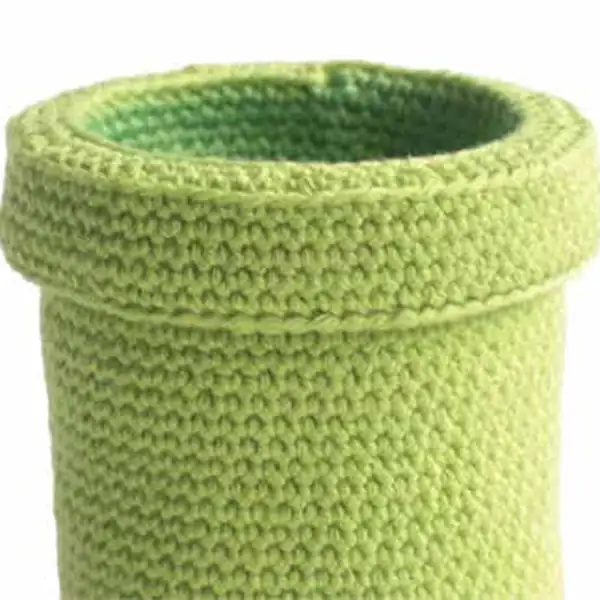
Round 1: Your pipe is looking like this. 2) Insert the darker green coloured piece inside. 3) Push it and shape it inside the inner pipe. Make it neat. 4) Don’t forget the outer part, shape the edges and make it neat. 5) You’re done making pipe 1. 6) Make pipe 2. Follow pipe 1’s pattern, but double the height: From R16, instead of sc around for 9 rounds, you sc around for 18 rounds.

— Closing :

Round 48: (4sc, dec) x6 [30];
Round 49: (dec, 3sc) x6 [24];
Round 50: (2sc, dec) x6 [18];
Round 51: (dec, sc) x6 [12];
Round 52: dec x6 [6];

— Dots :

Round 1: 6sc in magic ring [6];
Round 2: inc x6 [12];
Round 3: (inc, sc) x6 [18];
Round 4: (2sc, inc) x6 [24];
Round 5: (inc, 7sc) x3 [27];
Round 6: (inc, 8sc) x3 [30];
Round 7: (4sc, inc) x6 [36];
Round 8: sc around [36];
Round 9: sc around [36];
Round 10: sc around [36];
Round 11: (inc, 5sc) x6 [42];
Round 12: (dec, 5sc) x6 [36];
Round 13: (4sc, dec) x6 [30];
Round 14: (dec, 3sc) x6 [24];

— Assembly :

Round 1: 6sc in magic ring [6];
Round 2: inc x6 [12];
Round 3: (inc, sc) x6 [18];
Round 4: (inc, 5sc) x3 [21];
Round 5: sc around [21];
Round 6: sc around [21];
Round 7: sc around [21];
Round 8: sc around [21];

— Part 20 :

Round 1: 4sc in magic ring [4];
Round 2: inc x4 [8];
Round 3: (inc, sc) x4 [12];
Round 4: (inc, 2sc) x4 [16];

Assembly Instructions

  1. Attach head to body by aligning neck stitches with the opening of the body and sew in place using a whipstitch, ensuring neck seam is neat and sturdy.
  2. Position arms on either side of the upper body between rounds 12-14, angle slightly forward for natural pose, and sew in place with light tension.
  3. Sew legs to the bottom of the body with even spacing, use R4-R7 of the body as a guide for placement to keep balance.
  4. Attach ears to the sides of the head between rounds 14-16, spacing evenly from the eyes, then fix in place with a few stitches for stability.
  5. Sew the cap to the head, aligning the brim with the eyes, and secure with several small stitches for a clean finish.
  6. Embroider the moustache and eyebrows; place eyes between rounds 16-17 with about 10 stitches between them, then carefully position and sew.
  7. Insert the white shirt details with tiny stitches to create highlights on the overalls, then add the badge emblem on the cap for authenticity.

Important Notes

  • Choose an even gauge to prevent stuffing showing through; if the fabric appears tight, switch to a lighter weight yarn or a smaller hook.
  • Stuff gradually, using the starting tail to hold shape as you go; the head should be slightly denser than limbs for a balanced look.
  • Weave in each end as you complete sections to minimize finishing work later and keep assembly tidy.
  • Place eyes and facial features with care; tiny shifts can dramatically change Mario’s expression, so double-check symmetry before sewing.
  • When using wire for posability, thread through the arms with care and seal the ends to prevent poking; avoid small children’s toys if the project is for kids.

This cheerful Mario pattern is a celebration of classic gaming meet handmade craft. It blends well-loved colors with accessible stitches to create a durable, cuddle-worthy character. You’ll finish with a sense of accomplishment and a friend you can display proudly. Whether you gift it to a fellow Mario fan or keep it as a desk companion, this amigurumi invites mindful, enjoyable crafting moments that you’ll remember long after the yarn is cut. Happy crocheting and may your stitches stay precise! Enjoy the process from start to finish and let the little hat, overalls, and mustache bring a smile to your day. Enjoy the playfulness as you complete each round and tie off the last stitch with care.
Good to know

You ask, we answer

The finished piece measures approximately 12 cm tall when using the recommended yarn and hook size.

Yes, you can, but different weights will change size; adjust hook accordingly to keep proportions similar.

This pattern is Intermediate; basic crochet stitches and color changes are helpful to have in advance.

Most crocheters finish in 6-8 hours, though time varies with your speed and how much detail you add.

Arms and legs sections ready for assembly in blue and beige
Join 100k+ crocheters

Get new free patterns, stitch tips and exclusive content in your inbox.