Crochetologist
Free Crochet Pattern
Beautiful Detailed Adorable

Flower bouquet C crochet pattern

Colorful crochet tulips and daisies arranged in a bouquet with green leaves
4.5Rating
5-7 HoursTime
IntermediateSkill
Highlights

What makes it special

Handmade Charm

A warm accent for your home that showcases crochet artistry in a compact bouquet, ideal for gifting and shelf styling.

Weekend Treat

Takes 5-7 hours, making it a satisfying project to finish over a weekend and perfect for gifting or brightening a space.

Intermediate Level

This pattern is ideal for crocheters who enjoy floral forms and want to practice working in the round, changing colors, and adding wire support to create lifelike stems.

Imagine a handcrafted bouquet that forever stays fresh, a tactile project that blends color, texture, and scent of creativity. This pattern invites you to build a charming arrangement from individual crochet flowers, each shaped with care and finished with delicate details. It’s the kind of project that fits into a cozy weekend routine, offering a sense of accomplishment as the stems take form. The bouquet becomes a thoughtful gift moment, a way to celebrate a milestone or simply say you’re thinking of someone special with a handmade keepsake.

Your crochet journey will feel guided as you combine tiny petals, sturdy stems, and dainty leaves into a cohesive display. The craft rewards patience and a steady rhythm, turning skeins of yarn into a tangible bouquet that can brighten any room for years to come. It’s also a wonderful entrypoint for experimenting with wire and glue in safe, controlled steps that preserve the soft character of the flowers while adding just enough structure.

About This Flower bouquet C crochet pattern

This bouquet pattern brings a handmade touch to any room, combining soft petals with delicate greenery. You’ll learn to assemble a charming assortment of flowers on bendable stems, then tie them together with a lacy wrap for a studio-worthy finish. It’s a thoughtful gift project that builds confidence with basic crochet stitches and simple wiring techniques.

The result is a compact, displayable arrangement that stays fresh when kept out on a shelf or a tabletop. You can customize colors to suit a friend’s favorite palette or your own decorating vibe, making each bouquet feel truly yours.

This design centers on a bouquet built from multiple flower types, each created separately before being joined into a unified arrangement. You’ll work small petals and big petals to mimic tulips, stitch centers for daisies, and craft rose forms with careful shaping. The stems rely on bendable wire to allow positioning, while a lace wrap around the base holds everything together with graceful drape. Colors can be swapped freely, letting you craft a pastel party or a bold statement bouquet. The project encourages a mindful, rhythmic crochet process that blends texture with a light, decorative wirework for stability.

Each flower is assembled with a few straightforward techniques that reinforce confidence: magic ring starts for compact centers, single crochet and half-double crochet for petal texture, and discreet slip stitches to secure options. The assembly phase invites you to arrange stems thoughtfully so that the overall silhouette reads balanced and natural. Finishing touches include a light spray of glue to secure petals and a soft wrapping of fabric or tulle for a refined, ready-to-gift presentation.

By the end, you’ll have a portable, show-ready bouquet that can be adapted to seasonal colors or personalized as a keepsake for anniversaries, birthdays, or housewarming celebrations. The pattern is designed to be forgiving for those who are comfortable with basic stitches while inviting experimentation with color and texture. You’ll gain practical experience with light wiring, careful shaping, and precise placement that elevates your crochet portfolio.
Bleached white petals and soft greenery forming a bouquet centerpiece

Working through the petals and leaves teaches you to manage multiple small parts and consider scale, which pays off in larger projects. The bouquet comes with a minimal toolkit: a small amount of wire, a few colorways, and a steady hand for gluing and wrapping. The experience culminates in a display piece that resembles a professionally styled arrangement, yet remains entirely handmade. You’ll find joy in the repetition of floral shapes, the gentle rise of stems, and the satisfying click of finishing a delicate bloom that holds its form.

Along the way, you’ll refine your technique for combining separate elements into a cohesive whole. The project rewards careful color planning and a patient approach to shaping petals so they hold their rounded contour. When you pair the crochet together with a light touch of glue and wire, the bouquet gains artistic polish that can outlast fresh-cut alternatives. It’s a satisfying balance of craft and artistry that you’ll be proud to display or gift.
Stitches & Skills You'll Use

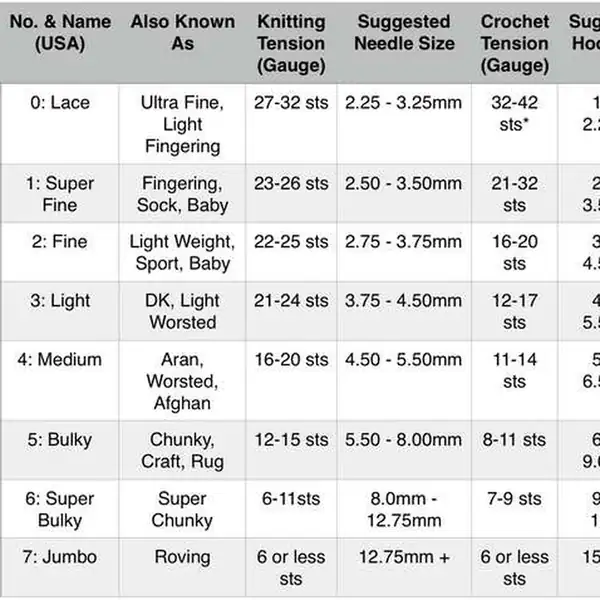
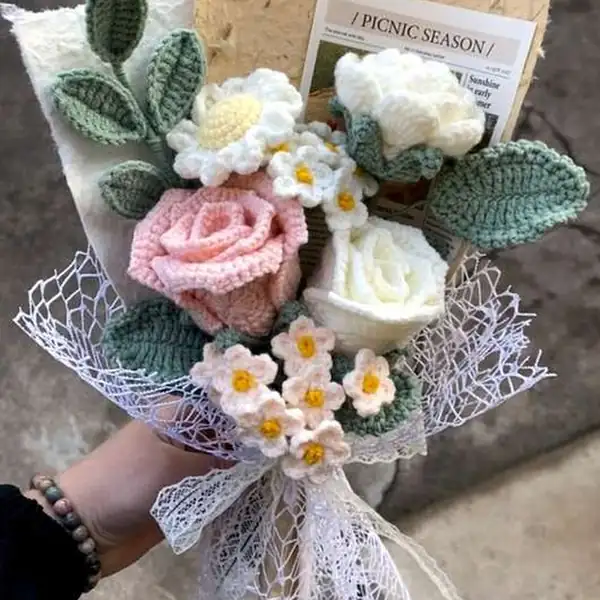
Stitch spotlight focuses on five core techniques that appear across the flowers in this bouquet. The magic ring is leveraged to create compact centers, while single crochet stitches form the primary texture for petals. Increases and decreases shape petals with gentle curvature, and slip stitches help secure attachments without adding bulk. Front and back loop variations create subtle texture differences that mimic natural petal surfaces. The assembly phase uses light glue to secure petals to stems, maintaining a soft, flexible feel while preserving the bouquet’s structural integrity.

Alongside these, you’ll employ junior-level wire work to bend stems and anchor florals into a pleasing arch. The combination of crochet and simple wiring teaches practical handling of mixed media, resulting in an arrangement that feels alive yet compact enough to transport. The project also demonstrates careful finishing: weaving tails into the stems and trimming excess wire for a clean, professional outcome. The patterns invite experimentation, but they keep the core steps straightforward so you can enjoy steady progress without confusion.

Finally, you’ll practice layout decisions—where to place daisies versus tulips, how many stems to feature, and how to wrap the base to hide glue and wires. The goal is to achieve a balanced, elegant silhouette that sits well on a table or shelf. With patience, you’ll master a cohesive look that respects the scale of each bloom while maintaining a unified bouquet presence that sings with handcrafted charm.

Why You'll Love This Flower bouquet C crochet pattern

I absolutely adore the quiet satisfaction of finishing this bouquet, where each bloom carries its own personality yet contributes to a harmonious whole. The project rewards thoughtful color choices and clean assembly, which makes it feel like a small sculpture you can reuse for different occasions. I enjoy the gentle ritual of shaping petals and arranging stems, knowing every stitch matters toward the final aesthetic.

My affection for this pattern comes from how approachable it remains while still offering opportunities to customize. The wires provide subtle structure without overpowering the soft crochet texture, so the piece remains comfortable to hold and admire. I relish the sense of play that comes with color swaps, making each bouquet feel like a unique gift or personal adornment. It’s a project I reach for when I want a tangible reminder of craft’s warmth and patience.

In the end, this bouquet becomes a keepsake that captures imagination and care. It’s not just about crochet skills; it’s about the process of combining shapes, textures, and materials into something that feels lively and fresh. I love seeing the bouquet come together, feeling the yarn thrum with potential, and knowing the finished piece will brighten someone’s day for years to come.

Colour & Yarn Inspiration

Choose a flower palette that mirrors a favorite season, such as soft pinks, creams, and sage greens for spring, or jewel tones like plum, emerald, and gold for autumn vibes. You can replace a few petals to reflect dyed colorways while preserving the structural design.

Substituting a 4 ply cotton in bright colors with a slightly more matte yarn can change the bouquet’s mood without altering the stitch count. When you experiment with color placement, aim for balanced contrast so each bloom remains distinct yet cohesive within the overall arrangement.

Wrapped bouquet tied with lace and ribbon for gifting

Switch Things Up

I love how easily colorways can be swapped to reflect seasons or personal tastes, so I often try a pastel palette for spring or a bold mix for a festive display.

To change the scale, I substitute a lighter or heavier yarn, then adjust the hook size to maintain the same overall shape and count. A smaller hook with thinner yarn yields a delicate bouquet, while a larger hook and chunkier yarn creates a chunky, statement piece.

Embellishments like tiny felt centers or subtle beads can add texture without overpowering the crochet work, and I enjoy experimenting with this extra touch for variety.

Finally, consider building a small trio of bouquets in complementary colors and arranging them as a coordinated centerpiece for a dining table or entryway shelf, which instantly elevates your decor with handmade charm.

Ways to Use & Gift It

Gift this crochet bouquet as a thoughtful gesture for housewarmings, anniversaries, or birthdays, especially when you want something unique and lasting. Its compact size makes it ideal for desk or bedside display, bringing a little everyday joy to the recipient’s space.

Pair the bouquet with a card and a ribbon-wrapped wrap, and you have a ready-to-ship present that exudes care. If you’re feeling extra creative, attach a small tag with the recipient’s favorite color and a note about the stitches you used, turning your handmade gift into a memory with a personal touch.

Common Mistakes & How to Fix Them

Skipping wire prep or anchoring can cause stems to wobble; ensure wires are securely attached and bend gently to hold their shape before final assembly. Inconsistent tension during petal shaping leads to flat flowers; maintain even tension and test texture by comparing a couple of petals before proceeding. Overgluing petals risks stiff, unnatural blooms; apply a light touch and let the glue set before adding additional petals for a natural bloom curve. Misplacing petals on the stem creates lopsided blooms; orient stems with a visual center in mind and adjust as you go for balance. Neglecting to trim ends evenly makes the base bulky; trim wires and tails precisely for a neat bouquet foundation. Failing to let glue cure can shift petals; allow ample drying time before moving to the next stage to preserve placement.

Maker's Notes

When I first tested this bouquet, I used a 2.5 mm hook with 4 ply cotton yarn in pastel hues. The project took roughly 6 hours spread over two sessions. Beginners tended to stumble on petal shaping, so I focused on consistent tension and a gentle touch with increases for a natural curve.

The wire insertion was the trickiest part, requiring careful alignment to maintain the bouquet’s round silhouette. Overall, the bouquet held its form well after drying and glue setting, making it a reliable project with pleasing results.

I tried a substitution: I substituted the cotton yarn with a DK weight in the same color family and used a 2.25 mm hook. The flowers grew proportionally larger, resulting in a bouquet that appeared more oversized relative to the base. To compensate, I reduced the number of petals slightly and tightened knotting around the stems. The final look remained cohesive, showing that tension and scale adjustments can preserve the bouquet’s charm even with a different yarn weight.

Flower bouquet C crochet pattern

Make this crochet flower bouquet with a simple, clear pattern. Free crochet pattern with full instructions, materials, and assembly tips. Start today!

Intermediate 5-7 Hours
Pattern at a glance
Skill level
Intermediate
Time to make
5-7 Hours
Hook size
2.5 mm (E) (used throughout pattern)
Yarn weight
4 ply cotton yarn
Finished size
Approx. 25 cm tall bouquet
Gauge
Gauge is not critical for the bouquet; use your best tension to keep petals rounded
Yarn used
Main color yarn total approximately 180-260 g overall; additional colors vary by palette

Materials Needed

Main Fabric
  • 01
    Cotton yarn (4 ply) in assorted colors for petals and leaves
  • 02
    Thin wire for petals and leaves (approximately 0.6 mm)
  • 03
    Thick wire or wooden stick for stems (approximately 2 mm)
  • 04
    Glue (hot glue) for securing petals and leaves
  • 05
    Wooden stick or floral stem base to anchor the bouquet
Tools Required
  • 01
    Crochet hook size 2-2.5 mm
  • 02
    Scissors
  • 03
    Yarn needle for weaving ends
  • 04
    Wire cutters
  • 05
    Pliers for adjusting stems
  • 06
    Pins or tape for temporary positioning
  • 07
    Ruler or measuring tape
  • 08
    Floral wrap material for finishing

— Small petals (x3) :

Round 1: Chain 12.
Round 2: (add wire) sk, sc, hdc, 7dc, hdc, w, hdc, 7dc, hdc, sc;
Round 3: 23 sc, sl, FO;

— Big petals (x3) :

Round 1: chain 13;
Round 2: sk, 11 sc, w, 11 sc;
Round 3: (add wire) sc, hdc, 9dc, hdc, w, hdc, 9dc, hdc, sc;
Round 4: 27sc, sl, FO;

— Big leaf :

Round 1: chain 31;
Round 2: (add wire) sk, 3 sc, 3 hdc, 18 dc, 3 hdc, 2 sc, w, 2sc, 3 hdc, 18 dc, 3hdc, 3 sc, sl, FO Start sticking with glue around the stick the small petals, and then add the bigger ones, in a circular way. Add the leaf in the down part of the stick, and roll yarn around the stick to secure the leaf and make the stem look more natural.

— Center of the flower :

Round 1: 6 sc magic ring;
Round 2: 6 inc;
Round 3: 12 sc and FO (Make one yellow and with the same steps make a green one for the back of the flower, to connect with the stem.) You will have to connect both and stitch it together, before completely closing the stitch add some fibrefill or cotton to fill the inside of the center. And then start with the;

— Flower :

Round 1: 5 sc magic ring;
Round 2: (2 ch, 3 dc, 2 ch) Rep 5 times The center of the flower just pass the yarn making some stitches in the center. You can make a few baby daisies and connect them to a wire o wooden stick rolling green yarn to make the stem. If you use a light color, there is also the option to add some blush on the edges to make some gradient in the color.

— Flower petals :

Round 1: chain 53;
Round 2: 52 sc;
Round 3: chain 5, dc, sk2, to begin with. The rest rep (dc, 2ch, dc) sk2 until the end. The part inside of the parenthesis has to be worked in the same stitch;
Round 4: chain 3, in the next hole work (2dc, 2ch, 2dc); Work on the hole of the upper part (2dc, 2ch, 2dc) Rep until the end;
Round 5: *ch 1, and in the hole of the upper part work 8dc. In the next hole work 1 sc. And repeat from* until the end and sl, FO.

— Flower bottom :

Round 1: (3 ch, 20 dc, sl st) magic ring;
Round 2: 8ch, ((sk, 2sc, 2hdc, 2dc, 1 tc) on chain) sk3, sl st Repeat 5 times and sl, FO, making a similar to star figure to put in the bottom of the rose.

— Rose leaf :

Round 1: 12ch, sk, sc, hdc, 7dc, hdc; on the other side of the chain: w, hdc, 7dc, hdc, sc;
Round 2: (add wire), sc, 2ch. Rep until reached the end and sl, FO. Stick every part together and roll yarn around a wooden stick to make the stem.

— Petal :

Round 1: 10 dc magic ring;
Round 2: 10 hdc inc;
Round 3: 6 sc, 8 hdc inc, 6 sc Midi petal (x4)

— Tulips :

Round 1: 10 dc magic ring;
Round 2: 10 hdc inc;
Round 3: (2 sc, sc inc) rep;
Round 4: 8 sc, 9 hdc inc, 9 sc Big petal (x5)

— Small Petals (Tulips) X3 :

Round 1: 10 dc magic ring;
Round 2: 10 hdc inc;
Round 3: (hdc, hdc inc) rep;
Round 4: 8 sc, 6 hdc inc, (hdc, dc in same st), 3 ch, (dc, hdc in same st), 6 hdc inc, 8 sc Flower bouquet C crochet pattern Rose flower type 2 ;

— Flower bottom :

Round 1: 6 sc magic ring;
Round 2: 6 inc;
Round 3: 6 (sc, inc)
Round 4: 18sc;
Round 5: [9 ch, (sk1 backward, 2 sl st, 2sc, 2 hdc, dc, tc in chain), sk 2, sl st] rep 6 times.

— Rose leaf :

Round 1: 12ch, sk, sc, hdc, 7dc, hdc; on the other side of the chain: w, hdc, 7dc, hdc, sc;
Round 2: (add wire), sc, 2ch. Rep until reached the end and sl, FO.. Start sticking and rolling the petals as the image, in order, from the small petals to the big petals. Stick every part together and roll yarn around a wooden stick to make the stem. To add gradient to the flower you can add some blush.

— Leaves :

Round 1: Chain 12;
Round 2: (add metallic wire to secure the position) sk, sc, hdc, dc, 5 tc, dc, hdc, w, hdc, dc, 5 tc, dc, hdc, sc, sl, FO. Make 5 or 7 leaves (depending if you want to make the leaves branch bigger or smaller), and connect all as the picture to the wooden stick, making leaves coming out of the stem. Don't forget to roll yarn over to wooden stick to make it more realistic. Leafs;

Assembly Instructions

  1. Arrange tulips, daisies, and roses around a central stem arrangement, then glue the stems to a base at evenly spaced intervals.
  2. Attach the smallest petals first, then add larger petals in a circular progression to create a natural bloom shape.
  3. Position the leaf motifs on the lower portion of the stems and wrap a length of yarn around the stems to secure them and hide glue.
  4. Place the daisies and baby daisies toward the center of the bouquet and tie in place with a lace wrap, keeping a light, airy look.
  5. Finish by wrapping the entire bouquet with a decorative material and securing with a few strategic stitches; trim any excess thread and wire ends.

Important Notes

  • Use stitch markers to track rounds and color changes for consistent flower shapes.
  • Stuff firmly but not overly tight; shape petals with care to maintain natural curves.
  • Weave in yarn tails as you go to avoid a finishing pile of loose ends.
  • Work in a well-lit area to monitor color balance and alignment.
  • Allow glue to fully cure before moving the bouquet to its final display position.

This bouquet pattern is a celebration of small stitches coming together to form something beautiful and lasting. Each bloom is crafted with care, then nestled into a wearable arrangement you can share with friends and family. May your colors bloom with confidence and plenty of happy crochet hours ahead.

Good to know

You ask, we answer

Begin with a basic set of 4 ply cotton yarns in several colors, a 2-2.5 mm crochet hook, thin wires for petals, and a wooden stem base. Have glue and a light lace wrap ready for assembly.

It is best for an intermediate crocheter who is comfortable with working in the round, color changes, and using wire. A determined beginner can try with patience and slow progress.

The bouquet features tulips, daisies, and roses with multiple petals and leaves, arranged to form a balanced cluster around a central stem.

Yes, choose colors to match the recipient’s favorites; the pattern supports color swaps with the same stitch counts, maintaining the bouquet’s silhouette.

Close-up of rose-type crochet flowers with layers of petals
Join 100k+ crocheters

Get new free patterns, stitch tips and exclusive content in your inbox.