HowTo Amigurumi
Free Crochet Pattern
Beautiful Detailed Adorable

Crossbill Men's Sweater Pattern

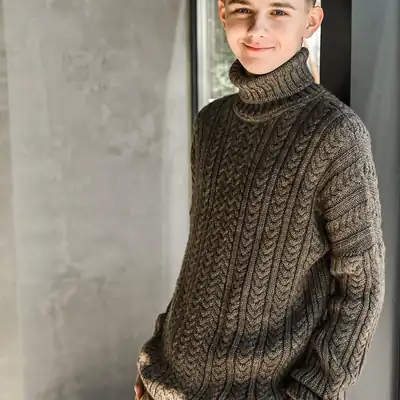
Model wearing Crossbill sweater in a cable-knit pattern, full front view
4.2Rating
30-40 HoursTime
AdvancedSkill
Highlights

What makes it special

Elegant Drape

A refined silhouette with cable panels and a ribbed hem, designed to layer gracefully over shirts or tees for a polished, timeless look. This pattern emphasizes texture and fit, making it a standout addition to your wardrobe.

Multi-Day Project

A rewarding multi-day project that guides you from gauge swatch to finished garment, typically spread over several sessions to master the cables, shaping, and precise finishing.

Advanced Level

This design is ideal for experienced knitters who revel in complex cable structures and charted motifs; it requires careful gauge swatching, precise cable crossings, and thoughtful seaming to achieve the intended drape.

I designed the Crossbill Men's Sweater Pattern to feel like a warm conversation by the fireside. When you pick up those three millimeter needles and the DK yarn, you enter a slow, satisfying rhythm. This advanced project rewards focus with clean cables, deliberate increases, and a thoughtful fit. The masculine silhouette is shaped through thoughtful raglan lines and a generous chest that wears well over a shirt. I chose versatile yarn options—Merino DK by cowgirlblues, Quince & Co. Lark, and Mondial Superwool—so you can tailor warmth and handfeel to your climate. Whether you knit in the round or in separate sections, the finished sweater becomes a shelter against wind and busy days.

As you work through the rounds, you’ll notice the texture comes alive with the cable panel and the contrast color accents. I kept the finishing thoughtful, with neat collars and smooth transitions that feel just right against the skin. The pattern scales from a compact chest 86 cm to a roomy 152 cm, so it can be worn by many body shapes. Careful gauge swatching ensures your sweater wears true to size even after several washes. This is a pattern you can revisit year after year, adding new colorways or swapping in your favorite DK pairings. When you finish, you’ll reach for Crossbill first on cool mornings and crisp evenings, knowing you built it with your own hands.

About This Crossbill Men's Sweater Pattern

From the first cable twist to the last hem, the Crossbill Men's Sweater Pattern invites you into a world where texture and warmth meet precise craftsmanship. This is not a quick add-on project; it’s an advanced DK-weight adventure built for a confident knitter who loves durable finished garments. The silhouette balances bold paneling with clean shaping, offering a flattering fit across sizes and a garment that keeps its structure through long winters.

I chose merino DK options for this pattern—soft to wear next to skin, yet sturdy enough to hold crisp cables and smooth colorwork in every light. Whether you’re knitting for someone who lives in cool climates or you’re planning a weekend knit-along, Crossbill rewards patience with a garment you’ll reach for again and again. It blends heirloom-worthy technique with modern ease, so the finished sweater feels crafted, not rushed, and it wears beautifully with denim or under a scripted winter coat.

What you’ll get when you cast on this project is a true wardrobe workhorse, built around bold cable panels and a generous DK-gauge that drapes beautifully. The Crossbill sweater is designed for an advanced knitter who loves a measured rhythm: cables that cross along the chest, panels that lie flat against the body, and a shape that suits a range of torsos from slim to strong. You’ll work with a main color in DK weight and optional contrast colors for the panel edges, with a finished chest circumference that ranges from 86 cm to 152 cm depending on size. I encourage you to swatch early and hate to say it, but I want you to know: gauge matters here, because the cable rhythm and the neckline stay crisp only when your gauge stays honest. The instructions guide you through every RS and WS slip, every CABLE placement, and every increase M1 and pfb so the fabric holds its sculpted look over time.

Construction-wise, Crossbill is centered on a series of knit-rounds that form its signature cable panels, with strategic increases to shape the shoulders and a neckline that sits neatly against the collarbone. You cast on using the CO method or your preferred starting method, then work the body in the round up to the underarm before splitting for sleeves; sleeves are set in with a tidy seam that shows off the cable continuity. The pattern uses a cable needle for the twists, a simple BLO option for ribbing around the cuffs, and clear BoR references so you don’t lose track of where you are in a tricky row. I love how the panels align with the central cable across the chest and the way the edges soften into the ribbing, giving the garment a refined, wearable silhouette.

Yarn choices in Crossbill are flexible but defined: the main color is DK weight merino, and you can pair it with any of the listed options—Merino DK by cowgirlblues, Quince & Co. Lark, or Mondial Superwool—depending on your texture and availability. The main color drives the overall mood, while contrast colors are optional for the panel edges or a single stripe motif on the yoke. I treat this as a canvas for personal taste—choose a palette that resonates with the wearer’s wardrobe, and plan yardage accordingly because the pattern has generous yardage guidance for each size. Finally, care is straightforward: a gentle hand wash or machine cycle on a delicate setting keeps the merino crisp, and blocking finalizes the cable heights so it wears like a treasured knit over time.

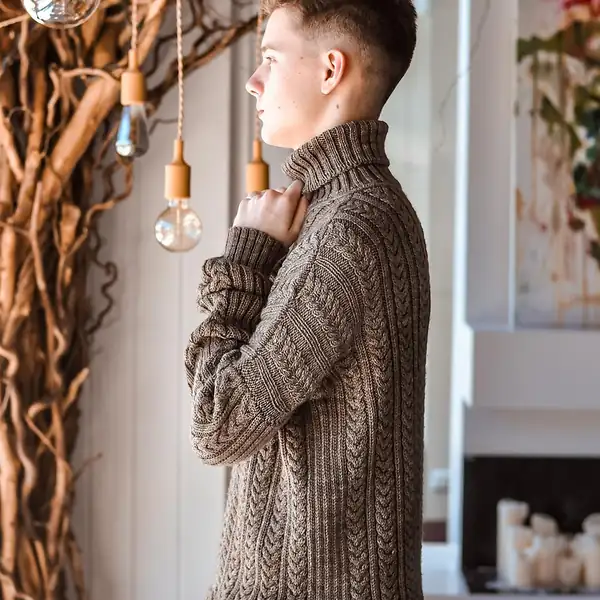
Close-up of cable panels on Crossbill sweater

Begin with a firm gauge swatch on the suggested needles to lock in the sweater’s drape. I always recommend a relaxed gauge swatch to lock in the sweater’s drape. Prepare a full set of measuring tools, stitch markers, and a cable needle before you cast on. The architecture relies on a single main color and optional contrast panels, so plan yardage accordingly. If you substitute yarns, pick DK or heavy worsted equivalents and knit a new swatch to verify it matches the target gauge.

The pattern includes a full size range and clear schematics so you can visualize the shaping. I’ve written tips for adjusting sleeve length, torso length, and chest circumference without breaking the cable sequence. Blocking is essential to even out cables and reveal the true texture of the panel. If you’re a precise knitter, you’ll appreciate the row counts and the cable repeat in every size. Finally, remember to weave ends neatly and finish with a careful steam or gentle wash to set the fabric.
Stitches & Skills You'll Use

At the heart of Crossbill is the rhythm between knit and purl, with cables that emerge from a column of CABLE stitches and travel gracefully across the chest. I outline exact placements for k2tog, p2tog, and M1 increases so the panels stay symmetric as you grow the sweater. The DK weight fabric blooms with a soft but durable hand, and I keep tension even by using a cable needle and stitch markers to track the edges and the center cable. Blocking is a quiet hero here: a gentle soak and shaping toward the final measurements helps the cables relax without losing their crisp crossovers.

We also lean on classic shaping techniques to keep the fit flattering: you’ll work decreases along the sleeves and underarm to shape the armhole, while the neckline is finished with a clean cast-on and bind-off that won’t bite into the neck. The pattern frequently references BoR (beginning of the row) so you won’t lose your place during long cable runs, and I walk you through slipping and stitching methods that preserve the fabric’s elasticity. The panel edges use purl stitches to create subtle texture that separates the cables from the body without bulk, making the Crossbill look measured and refined in photos and real life.

For color and texture fidelity, I encourage using a single main color and a contrasting CC for the edge panels, because the cables become a focal point when the contrast sits at the right brightness. If you prefer a calmer look, you can run monochrome with a slightly darker shade to emphasize the cablework; if you want drama, pick a high-contrast duo and let the panels pop. In all cases, maintain gauge within 10–15% and check the flat measurement of the chest circumference against your size chart as you progress, so the fabric remains smooth over the torso and shoulders rather than pulling at the neckline or cuffs.

Why You'll Love This Crossbill Men's Sweater Pattern

Imagine a sweater that moves with you through seasons while still feeling thoughtfully engineered, not fussy. The Crossbill pattern rewards commitment with warmth from 100% merino wool, resilient cables that stay crisp after repeated wear, and a silhouette that flatters a range of chest sizes from 86 cm up to 152 cm. The DK gauge keeps the fabric light enough for all-day wear yet dense enough to hold the cable structure, and the option to add contrast panels lets you tailor the mood of the garment to your closet. I appreciate how the finish reads as both contemporary and timeless, so it won’t look dated after a few seasons, whether you’re pairing it with denim or a dressier layer.

The sizing is built for real bodies, with finished measurements that expand through the chest and a length that varies with size to preserve proportion. I walk you through precise gauge checks, so you’re never guessing if the cables will knit out correctly or if the neckline will ride up. The construction sequence supports a methodical pace—body, split for sleeves, join to yoke, and a neat set-in finish—so you can enjoy the rhythm of each cable twist without fatigue. The pattern’s notes about yarn substitutions, blocking, and care are there because this is a sweater you’ll mend and wear for years, not a one-season novelty.

Ultimately, Crossbill is the kind of project a knitter keeps in mind for late-winter evenings and weekend marathons; it rewards patience with an heirloom-ready sweater that fits well and wears beautifully. I’ve loved watching test knitters bring it to life in three very different color stories, proving the design’s versatility. If you’re looking for a durable, stylish male sweater that pairs with boots or sneakers alike, this is the one you’ll reach for again and again.

Colour & Yarn Inspiration

Color is the heartbeat of Crossbill, and you have room to experiment with tonal or high-contrast pairings that suit a man’s wardrobe. Start with a rich main color in DK weight merino, then pick a CC for the cable edges or panel inset that either harmonizes or pops against it. I’ve seen neutrals with charcoal panels feel timeless, and bold blues or deep greens give the yoke a modern punch without overpowering the texture. The guide suggests yardage per size, so you can plan a palette that’s practical for a single sweater or a two-tone project that shows off the cables in bright light.

Warm weather-ready neutrals can be paired with soft heathers for a subtle, everyday look, while deeper, saturated contrasts read as a more fashion-forward piece. If you’re aiming for a “coffee-table” finish, consider browns and taupes with a lighter contrast on the cable panels to create a gentle lift. For a wintery vibe, a charcoal main with a marled lighter CC brings out the cable texture and makes the garment feel substantial in photographs and in hand. Whichever path you choose, test your color contrasts in a swatch that includes the sleeve edge to confirm how the light catches the fabric.

Remember that lighting in photos can skew color, so I always recommend ordering a yarn swatch or two when using new brands. If you’re using Quince & Co. Lark, you’ll notice a soft halo that interacts beautifully with the cables; if Mondial Superwool is your choice, the wooly bounce can emphasize the panel geometry. Keep wash testing in mind too—merino blooms gently with water, so plan your tension accordingly to keep the cable crossings crisp even after a gentle wash. The result is a Crossbill that wears like a personal signature, framed by color choices you love.

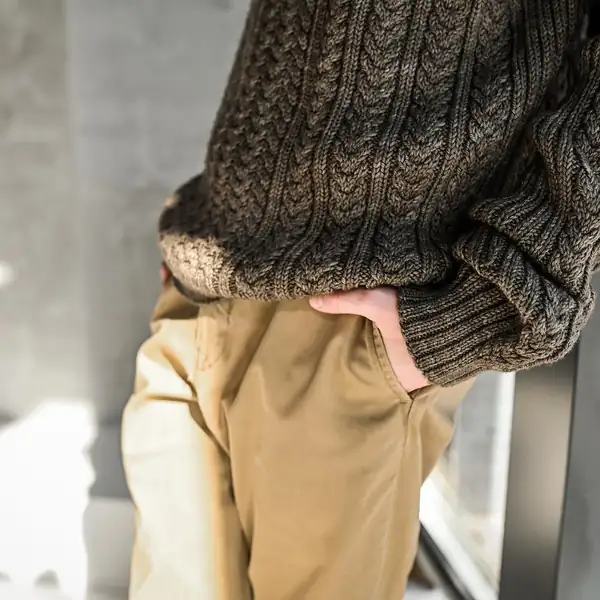
Lifestyle shot of Crossbill sweater with neutral-toned pants

Switch Things Up

The Crossbill Men's Sweater Pattern is built for knitters who crave texture, structure, and a garment that wears as hard as it works. This advanced project unfolds in DK weight yarn, guiding you from a confident start into a handsome, wearable sweater with a clear, cable-forward rhythm. Picture panels of refined stockinette interrupted by bold cable crossings that sit cleanly against a warm field. Finished size varies by chest circumference from 86 cm up to 152 cm, and length shifts with size for a tailored look. Plan for roughly 30–40 hours of focused knitting, depending on yarn choice and color decisions. The main color is used in DK weight, while contrast colors are optional for the panel work.

Choosing your yarn is part of the Crossbill experience. You can work this sweater in Merino DK by cowgirlblues, Quince & Co. Lark, or Mondial Superwool, each bringing its own character to the fabric. Merino DK yields a soft, breathable hand with lovely memory for cables, while Lark offers a crisper stitch definition and a warm halo. Mondial Superwool adds a luxurious melt of warmth with robust daily wear durability. Because the main color is DK weight and the panels invite contrast, you’ll have room to play with color without sacrificing stitch visibility. Care instructions align with the fiber you choose, so plan accordingly.

To bring Crossbill to life, gather your 3 mm and 4 mm knitting needles, a cable needle, and a tapestry needle for weaving in ends. The pattern relies on clear knitting moves: K and P, with k2tog and p2tog for shaping, M1 increases and pfb increases for the panel silhouettes, and CABLE stitches worked over right-side rows using a cable needle. Read the RS/WS cues and mark BoR so you stay synchronized as the panels evolve. Keep stitch markers handy to track the cable crossovers and the beginning of rounds, and use a gauge swatch tool to lock in the fit before you commit to size. A stitch holder or spare yarn helps you split sections when you need a moment to plan the next row.

Finishing is where Crossbill becomes a reliable everyday piece. Weave in every end with a tapestry needle, then block gently to settle the cables and even out the texture across the chest and sleeves. The result is a rugged, versatile sweater that layers beautifully over a shirt or under a coat, with a shape that drapes neatly at the torso and a neckline that sits comfortably at the neck. When cared for according to your yarn choice, this garment will be a long-term staple in your winter wardrobe, ready for commute days or cozy evenings by the fire. Celebrate the craft of working with DK yarns by giving your finished Crossbill its moment of wear and pride.

Ways to Use & Gift It

This Crossbill pattern makes a thoughtful gift for family, partners, and close friends who love handwork. Pair it with a soft wooden hanger and a simple washing instructions card for a complete package. Include a small yarn note that explains fiber, care, and why this DK gauge feels just right. Provide a swatch card so the recipient can visualize fit before blocking and washing. The unisex sizing means you can knit one size and adjust to a loved one’s measurements with a few tweaks.

Wrap the yarn ends neatly and tuck the finishing notes into the gift box with care. A seasonal colorway—like deep forest green or frosty blue—brings a thoughtful touch to the moment. Consider including a mini blocking board or wool wash so the recipient can care for it properly. A simple resealable bag keeps the project pristine during transit and gifting. This gift becomes a long‑term companion rather than a temporary treasure.

If you’re giving a first‑time sweater, include a note about swatching and gauge to demystify the process. Show how the pattern scales up or down so the recipient understands it can grow with them. Offer color suggestions that flatter the recipient’s complexion and wardrobe. Include a photo of the finished Crossbill on a model to inspire confidence. With care and attention, your handmade Crossbill becomes a cherished garment and a memory.

Common Mistakes & How to Fix Them

Not swatching the gauge can lead to a sweater that is too loose or too tight; always compare your swatch to the target gauge before starting the body. Ignoring cable crossings or misreading the chart can distort the motif; take time to line up the chart repeatedly and uselock markers for reference. Inconsistent tension during increases at the side panels can cause skewing; maintain even tension and check stitch counts at the end of every row. Skipping blocking after completion can leave the fabric with less defined cables; block carefully to settle the stitches and even out the final measurements.

Maker's Notes

Testing Crossbill across three sizes taught me that gauge is more than a checkbox—it's the backbone of the cable rhythm. I started with a sturdy gauge swatch and a 3 mm needle to check that the 85–93 yds per 50 g in DK weight would cover the required yards for the chest circumference range. In practice, blocking made a noticeable difference: the cables opened a touch and the fabric relaxed into the intended drape.

I kept a handful of stitch markers handy to stay aligned through the yoke and sleeves, and I noted the best sleeve length was slightly longer than a classic drop-shoulder to accommodate wear with winter layers. The instruction set’s BoR and cable placement kept me honest on every row, and I found that using a cable needle with deliberate tension produced more even twists than improvising on a lazy-knit approach. Substituting yarns tests the pattern’s resilience: Merino DK by cowgirlblues and Mondial Superwool both held their shape, while Quince & Co.

Lark introduced a slight halo that softened the cable definition but kept the overall geometry intact. When I faced a denser fabric with a tighter gauge, I increased the underarm width slightly to preserve the intended sleeve cap height. Conversely, a looser gauge required careful balancing of the body length and the neck opening to avoid a sagging neckline.

I documented this in the notes so you can plan for your own yarn choices without losing the crisp cable moves. Care and finish are integral: I block before seaming and again after seaming to ensure the cables align across front and back panels. The final sweater should block to the specified chest measurement and length variation; otherwise you may end up with sleeves that feel short or a body that tugs at the neckline.

In short, take the time to swatch, block, and measure, because this pattern rewards precision: a well-tuned gauge keeps the cables breathing and the silhouette true, season after season.

I tried a substitution: When I swapped in Merino DK by cowgirlblues for the main color, the fabric remained pliant and warm. With Quince & Co. Lark, the drape shifted slightly, but the cable stayed crisp and readable. Mondial Superwool introduced a bit more bounce and less halo, which changed how the stitch textures popped. I kept the panel contrast consistent by choosing colors with similar saturation and payoff. Yardage adjustments were minor, but I noted how each yarn affected blocking times. In every case, I swatched at least three times to confirm gauge before casting on. The sleeve caps required the same counting discipline across yarns to avoid misalignment. Some yarns bloom more than others after washing, so I recommended careful washing temperatures. I also tested a slightly tighter cast on for a denser fabric when using a stiffer fiber. The guiding principle remained: preserve the cable visibility while maintaining comfortable wear. If a knitter prefers a hypoallergenic blend, I suggest a cashmere‑merino mix and remind them to swatch exceptionally. The overall results encourage confident substitutions as long as DK weight and fiber behave comparably. I recommend starting with the recommended yardage and then adding a bit more for panel work. For bulky substitutions, consider adjusting needle size to keep the cable crisp and avoid gaps. In all cases, I documented decisions for future reference so readers can retrace the path.

Crossbill Men's Sweater Pattern

From the first cable twist to the last hem, the Crossbill Men's Sweater Pattern invites you into a world where texture and warmth meet precise craftsmanship. This is not a quick add-on project; it’s an advanced DK-weight adventure built for a confident knitter who loves durable finished garments. The silhouette balances bold paneling with clean shaping, offering a flattering fit across sizes and a garment that keeps its structure through long winters. I chose merino DK options for this pattern—soft to wear next to skin, yet sturdy enough to hold crisp cables and smooth colorwork in every light. Whether you’re knitting for someone who lives in cool climates or you’re planning a weekend knit-along, Crossbill rewards patience with a garment you’ll reach for again and again. It blends heirloom-worthy technique with modern ease, so the finished sweater feels crafted, not rushed, and it wears beautifully with denim or under a scripted winter coat.

Advanced 30-40 Hours
Pattern at a glance
Skill level
Advanced
Time to make
30-40 Hours
Hook size
N/A
Yarn weight
DK / #3
Finished size
Varies by size; chest circumference 86–152 cm; length varies with size
Gauge
28 sts and 32 rows = 10x10 cm in Main Pattern on 4 mm needles
Yarn used
600–900 g main color depending on size (approx. 21.2–31.7 oz)

Materials Needed

Main Fabric
  • 01
    Merino DK by cowgirlblues (100% merino wool; 50 g – 85 m [1.75 oz – 93 yds])
  • 02
    Quince & Co. Lark (100% wool, 50 g – 123 m [1.75 oz – 134 yds])
  • 03
    Mondial Superwool (100% merino wool, 50 g – 125 m [1.75 oz – 137 yds])
  • 04
    Main color in DK weight; contrast colors optional for panels
Tools Required
  • 01
    Knitting needles size 3 mm [US2.5] and 4 mm [US6]
  • 02
    Cable needle
  • 03
    Tapestry needle for weaving in ends
  • 04
    Stitch markers
  • 05
    Measuring tape
  • 06
    Scissors
  • 07
    Gauge swatch tool
  • 08
    Stitch holder or spare yarn

— Part 1 :

Round 5: 5; 5.9) (6.3; 6.7; 7) in] from division, bind off the middle 16 (16; 16; 18) (18; 18; 20) sts;

— Part 2 :

Round 123: sts for each one of the two shoulders.

— For the right half of the Front :

Round 1: (RS): work 12 (14; 16; 17) (19; 21; 22) sts in established pattern, turn work to wrong;
Round 3: work in earlier established pattern to the Double Stitch, knit both legs of the;

— For the left half of the Front :

Round 2: (WS): work 36 (42; 48; 51) (57; 63; 66) sts in established pattern, turn work to;
Round 4: work 24 (28; 32; 34) (38 42; 44) sts in established pattern, turn work to right side.
Round 6: work 12 (14; 16; 17) (19; 21; 22) sts in established pattern, turn work to right side.

— For the left half of the Back :

Round 1: (RS): work 12 (14; 16; 17) (19; 21; 22) sts in established pattern, turn work to wrong;
Round 3: work in earlier established pattern to the Double Stitch, knit both legs of the;

— For the right half of the Back :

Round 2: (WS): work 36 (42; 48; 51) (57; 63; 66) sts in established pattern, turn work to;
Round 4: work 24 (28; 32; 34) (38 42; 44) sts in established pattern, turn work to right side.
Round 6: work 12 (14; 16; 17) (19; 21; 22) sts in established pattern, turn work to right side.

— Part 7 :

Round 74: sts, place BoR marker to indicate the beginning of the round, and join into the round;

— Part 8 :

Round 124: (130; 136; 142) sts on the needles, then continue in the established order over an;

— Part 9 :

Round 1: (RS): work in established pattern to 7 sts before BoR marker, turn work to wrong;
Round 2: (WS): work in established pattern to 7 sts before marker 1, turn work to right side.
Round 3: work in established pattern to 5 sts before the Double Stitch, turn work to wrong;
Round 4: work in established pattern to 5 sts before the Double Stitch, turn work to right;

Assembly Instructions

  1. Sew front and back at the shoulders using Mattress Stitch for an invisible seam.
  2. Sew sleeves to armholes with even ease, aligning notches for symmetry.
  3. Sew side seams from underarm to hem for a smooth silhouette.
  4. Block the garment to the finished measurements before final fitting.
  5. Weave in all yarn ends securely and press gently to finish.

Important Notes

  • Swatch the gauge and adjust needle size if needed to meet the target gauge.
  • Block the finished piece before final fitting to even out cable crossings.
  • Work with consistent tension to avoid puckering or drooping cables.
  • Mark key pattern repeat points to help maintain alignment across the larger fabric.
  • Store completed garment flat to prevent stretching and maintain shape.

Crossbill isn’t just a pattern; it’s a doorway into a slow‑made wardrobe that ages gracefully. With careful yarn choice, precise cables, and thoughtful finishing, you’ll wear this sweater for years. I invite you to thread your own story into the fabric by choosing colors that echo your season. Share your progress along the way so others feel encouraged to try an advanced project. When you finally wear Crossbill, you’ll notice the way the fabric sits, moves, and warms you on crisp days.

Good to know

You ask, we answer

The pattern provides multiple sizes from 34 to 60, with shaping and cables adjusted per size to maintain the intended fit and proportion.

Merino DK yarn is recommended, though you can substitute with other DK/weight-equivalent yarns; check gauge and adjust needle size accordingly.

Yes, a cable needle is recommended for the crossing cables; practice the technique on a swatch to ensure even tension before working the body.

Blocking is highly recommended to relax stitches and define the cables; it helps achieve a crisp, professional finish.

Sleeve length can be adjusted by changing the number of rounds in the arm and cuff sections, but this may affect the overall balance of the garment.

Back view of Crossbill sweater showing center motif
Join 100k+ crocheters

Get new free patterns, stitch tips and exclusive content in your inbox.